Airport Security: Airport Fence Design and Management

Table of Contents

1.Airport fencing introducing

Airport fencing

Airports facilitating the movement of people and goods around the world. With increasing complexity of modern travel and heightened concern for safety, ensuring the safety of passengers, aircraft and airport staff has become Paramount.

The implementation of a robust perimeter fence system is an significant aspect of enhanced airport security measures.

Airport fence is a series of physical barriers and security measures designed to demarcate and protect the boundaries of airport facilities. These fencing solutions are carefully designed to keep wildlife out and prevent potential security threats.

In this guide, we delve into the complexity of airport fencing and how to improve its safety and operational efficiency. We examine the various types of fencing systems used, as well as the evolving technological innovations that are driving advances in security developments around airports.

2.Key elements of a superior airport fencing

For the security of airport facilities, advanced airport fence plays a vital role. The following key factors can help improve its effectiveness.

2.1 Height and Strength

The fence should be high enough to deter unauthorized entry. And another requirement is strong enough to resist attempts to break through. So the minimum height of airport fences is usually 8 feet.

2.1.1 Height

Higher fences make it harder for trespassers to breach the border and enter restricted areas. Height requirements may vary depending on the location of the airport, security concerns and regulatory requirements. In general, however, airport fences are recommended to have a height of at least 8 to 10 feet (2.4 to 3 meters) to provide effective security.

2.1.2 Strength

In order to prevent cutting or damage, the airport fence must be strong. It must be withstand external forces such as vehicle impact or attempts to climb or cut. What’s more security measures like barbed wire and razor wire can be added.

2.2 Anti-climb Design

Designing superior airport fencing system,it involves incorporating several key elements, with anti-climb features being paramount for security. Here’s a breakdown of the key elements and considerations for such a design:

Height:Fence should be sufficiently high to deter unauthorized access or climbing, a height of at least 8 to 10 feet is recommended for airport security fences.

Material: High-strength materials like welded steel mesh and aluminum,they are commonly used for airport fencing because their durability and resistance to tampering.

Anti-Climb Topping: One of the most effective anti-climb features is topping or deterrent, it makes it difficult for intruders to gain footholds or handholds. Some options include barbed wire, rotating spikes, or curved extensions that prevent gripping.

Mesh Size: The mesh or grille size should be small to prevent individuals from squeezing through or gaining foothold for climbing. Smaller mesh size improves overall structural integrity of the fence.

2.3 Durability and Resistance

When making fences, the material should have a strong and durable nature, can withstand harsh environmental conditions such as wind, rain, and snow, and the materials often used to welding nets, chain links, aluminum or steel and other materials.

2.4 Access Control

Critical aspect of airport security is access control , and a superior airport fencing system plays a vital role in ensuring, it is unauthorized individuals are kept out while allowing smooth passage for authorized personnel and vehicles.

The fencing should form a secure perimeter around the airport, preventing unauthorized access from all directions. It should be robust enough to withstand attempts at breaching or climbing.

2.5 Integration with Other Security Measures

The fencing should be integrated with other security measures like patrols, security personnel, alarm systems, and security checkpoints to provide layered security.

Centralized monitoring and management of security systems, including perimeter fence, are facilitated through integration with command and control center.

Security personnel can monitor live feeds from CCTV cameras, receive alerts from intrusion detection systems, and coordinate response efforts in real-time to address security incidents effectively.

2.6 Regulatory Compliance

Compliance with relevant security regulations, standards, and guidelines set forth by aviation authorities or government agencies is essential for ensuring the effectiveness of airport fencing.

2.7 Regular Maintenance

Scheduled inspections and maintenance are crucial to ensure the fence remains in optimal condition and continues to provide effective security over time.

3.The types of airport fencing

Airport fencing prevents unauthorized access to sensitive areas, thereby protecting aircraft, passengers and airport facilities from potential threats. There are some common types of airport fencing.

3.1 Welded Mesh Panel

Welded mesh is a mesh pattern,it is made of welded wire mesh. Grid consists of intersecting horizontal and vertical wires welded together.

The welded construction provides panels with strength and durability, making them suitable for applications where safety and stability are critical. Welded mesh panel comes in variety of sizes, wire thicknesses and mesh configurations.

They are often simple to install, versatile and cost effective compared to traditional fencing materials such as chains or wood.

3.2 Welded Double Mesh Panel
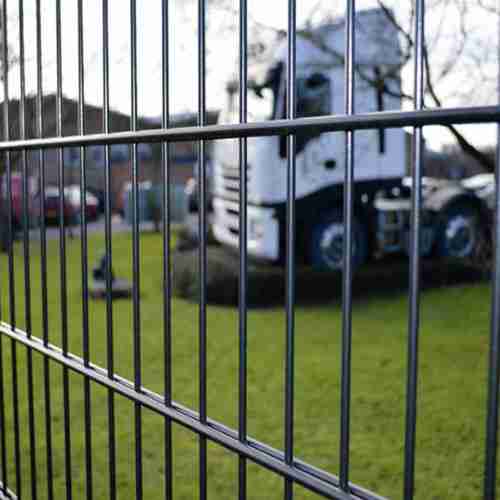
Welded Double Mesh Wire Panel

Welded double mesh is composed of two welded metal mesh plates welded at intervals, usually one on top of the other.

Compared to single-layer fencing, double-layer grilles are more resistant to bending and deformation. To increase security and make it difficult for intruders to climb or cut, it can reduce the mesh size. In order to ensure service life and corrosion resistance, the panels are made of galvanized steel wire or other corrosion-resistant materials.

3.3 Welded Single Mesh Panel

Welded Single Mesh Wire Panel

Single mesh board is welded together at its intersection, and the fence or barrier made is called welded single mesh board.

The mesh panels are usually compose of materials like steel, stainless steel, or aluminum, depending on the desired strength, durability, and corrosion resistance needed for the specific application. Welding the intersections of the mesh provides stability and strength to the panel, making it suitable for fencing purposes.

They offer advantages such as ease of installation, durability, and visibility while maintaining security and airflow. When selecting welded single mesh panel, factors to consider include the intended use, environmental conditions, required strength, and aesthetic preferences.

3.4 Curvy Welded Mesh Panel
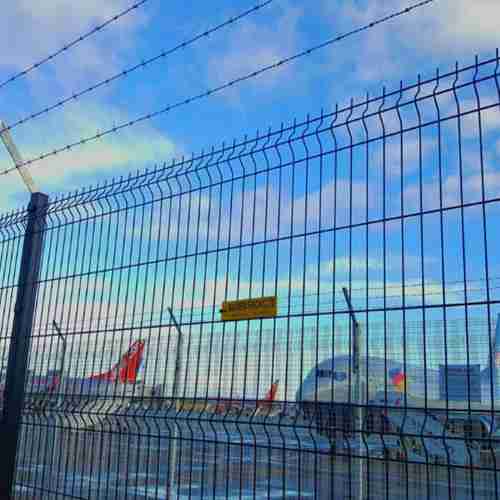
Curvy Welded Mesh Wire Panel

The shape of the curved welded mesh plate is bent into a curve and is a fence or barrier made of welded mesh.

The panels are usually welded at intersections and are made of steel wire to form a sturdy and durable mesh structure. After welding, specialized equipment can be used to manipulate the mesh to create curves or other desired shapes. This process allows for design flexibility while maintaining the strength and integrity of the panel.

3.5 Chain Link Mesh Panel
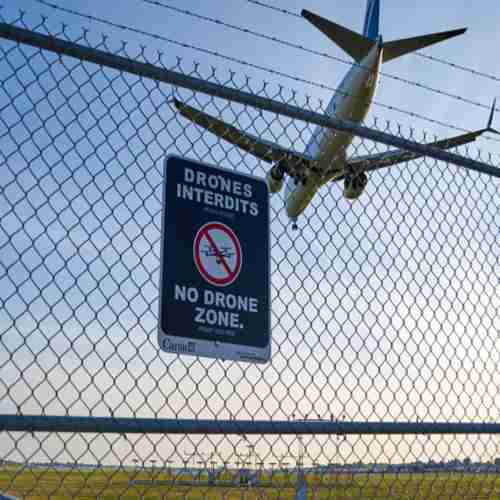
Chain Link Mesh Wire Panel

Chain link mesh is chain link fence system with diamond-shaped patterns made of interwoven wire. These panels are usually made of galvanized steel or polyvinyl chloride to increase durability and corrosion resistance.

Chain link panels have different heights and gauges (wire thickness) , allowing customization for specific needs. They are usually done by installing panels on concrete columns and anchoring them to other structures. Add features, like barbed tape or privacy bars, to enhance security or privacy.

3.6 Y-Post Airport Fence
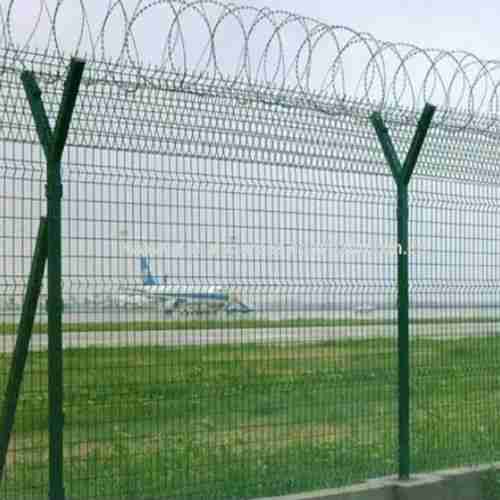
Y-Post Airport Fence

The Y-pillar airport fence uses Y-shaped design to provide greater stability and strength, and provides uniform impact resistance to protect airport from damage. Fences are usually made of high-strength materials such as steel or aluminum, and to further enhance security, barbed wire or other deterrents can be installed on top of the fence.

3.7 358 mesh panel

358 mesh panel

The name “358” refers to the size of the grid. 358 fence is known for its high strength and resistance to climbing, and it usually consists of closely spaced horizontal and vertical lines. small mesh size makes it difficult for intruders to gain a foothold during the climb.

358 mesh panels are usually welded together by wire to form rigid mesh structure. They can be hot-galvanized or coated with polyvinyl chloride for increased corrosion resistance and durability.

4. The welded process of airport welded mesh fencing

Silver airport fencing

When welding metal fence, single wires are first welded together using high temperature and high pressure to eventually form a grid pattern. These welded intersections create strong structure that prevents damage to the airport.

It is usually made of steel or galvanized steel for added strength and corrosion resistance. Wires are then fed into a welding machine and welded together at their intersections.

Depending on the specific requirements of the fence design, wire welding process can adopt different techniques, such as spot welding or resistance welding. After the grille pattern is made, in order to prevent rust and improve its aesthetics, panel can be galvanized or powder sprayed to further protect it.

The panels are trimmed to size and mounted onto a frame or post, forming a complete fence system ready for installation.

5.Colors available of airport fencing

Airport fences usually come in a variety of colors, although the specific choice may vary depending on the manufacturer and airport requirements. Common airport fence colors include:

Galvanized steel (silver): Because of its durability and corrosion resistance, it is a common choice for airport fencing. Galvanized steel fences are usually silver in color.

Black: Because black offers a stylish and modern look and also offers durability and visibility, black is another popular color for airport fencing.

Green: Green fences can blend in with the surrounding landscape or can provide a more aesthetically pleasing look.

White: White fencing can be used for visibility purposes, especially in areas where visibility is critical to safety.

Custom colors: Some airports may choose custom colors to match their branding or improve visibility or aesthetics.

6.Processing mode of airport fencing

Airport fencing is an important part of the airport security infrastructure, with the primary purpose of preventing unauthorized access to restricted areas, ensuring the safety of passengers, personnel and assets, and mitigating potential security threats. Treatment model of airport fence involves several key aspects.

6.1 Design and Construction

Design and construction of airport fencing includes considerations seem fence height, material strength, durability, and resistance to cutting or climbing. It requires careful consideration of security, safety, and functionality. Here’s general outline of the processing mode for airport fencing.

6.2 Risk Assessment and Requirements Analysis

When conducting risk assessment and needs analysis, potential security threats and risks need to be identified based on location, size and operation of airport. Re-determine the regulatory requirements and standards for airport fencing, including height, material specifications and access control measures.

6.3 Conceptual Design

Develop conceptual design for the airport fencing system based on the identified risks and requirements. Consider factors such as perimeter length, terrain, visibility, and integration with existing infrastructure.

6.4 Material Selection

Commonly used materials include chain fences, welded mesh, anti-climbing barriers and concrete barriers. When choosing the right material for the fence, it can be selected based on factors such as safety level, durability, maintenance requirements and cost.

6.5 Construction Planning

Develop detailed construction plan that Outlines the timeline, resources, and logistics needed to install the fence. Possible disruption to airport operations is also taken into account to implement mitigation measures.

6.6 Construction Planning

Develop detailed construction plan that Outlines the timeline, resources, and logistics needed to install the fence. Possible disruption to airport operations is also taken into account to implement mitigation measures.

6.7 Installation

Installation process needs to be arranged according to the approved design and construction plan, and ensure that safety protocols and regulatory requirements are followed throughout installation process.

When installing the fence, it should be closely coordinated with airport management, security personnel and construction teams to minimize interference and ensure smooth construction.

6.8 Testing and Commissioning

Conduct thorough testing of the fencing system, including security features, access control mechanisms, integration with other systems. Address any issues and deficiencies identified during testing to confirm system operates effectively and reliably.

6.9 Training and Handover

Provide training to airport staff responsible for operating and maintaining fencing system.

Prepare comprehensive documentation, contain operation manuals, maintenance schedules, and emergency procedures.

Hand over completed fencing system to airport authorities, ensuring all contractual and regulatory requirements are met.

6.10 Ongoing Maintenance and Monitoring

Implement proactive maintenance program to ensure ongoing reliability and effectiveness of fencing system. Monitor the performance of security features and conduct regular inspections to identify and address any vulnerabilities or issues promptly.

6.11 Continuous Improvement

Periodically review and update fencing system in response to evolving security threats, regulatory changes, and technological advancements. Seek feedback from airport stakeholders and security experts to identify areas for improvement and optimization.

6.12 Access Control Integration

Modern airport fencing often integrates with access control systems to manage and monitor entry and exit points along the perimeter. This may involve the use of technologies seem electronic gates, card readers, biometric scanners, or surveillance cameras to regulate access and detect unauthorized breaches.

Access control integration in the context of airport fencing,it typically involves implementation of various technologies and protocols to ensure authorized individuals can access restricted areas within the airport perimeter.

The processing mode of airport fencing refers to how access control systems manage and process entry and exit of individuals through fencing barriers.

In order to adapt to changes in security requirements or the expansion of infrastructure, access control system implemented in the airport fence must be scalable and flexible. This includes the ability to easily add or remove access points, adjust authorization levels, and integrate new technologies as they become available.

6.13 Response and Intervention

In the event of security breach or unauthorized intrusion, airport fencing should facilitate a rapid response from security personnel or law enforcement agencies. This may involve deploying security patrols, activating alarms or warning systems, and coordinating coordinated response to mitigate the threat and secure the perimeter.

6.14 Maintenance and Upkeep

In order to ensure that the airport fence continues to be effective and reliable, it needs to be regularly repaired and inspected. This includes routine checks for damage, corrosion, or wear and tear, as well as proactive measures to address any vulnerabilities or weaknesses in perimeter security system.

Maintaining and upkeep of airport fencing, especially in high-security areas, is crucial to ensure safety and security of the airport premises. Here are some key points to consider regarding the processing mode of airport fencing maintenance:

Regular Inspections: Implement schedule for regular inspections of the fencing perimeter. This can be daily, weekly, or monthly depending on the level of security required and the size of the airport.

Identify Vulnerabilities: During inspections, look for any vulnerabilities such as holes, damage, or areas where the fence may have been compromised. Pay special attention to areas near access points such as gates and entryways.

Prompt Repairs: Any damages or vulnerabilities identified during inspections should be repaired promptly. This might involve patching holes, replacing damaged sections, or reinforcing weak spots.

Testing Security Features: If the fencing incorporates security features such as alarms or sensors, ensure that these are regularly tested to verify their functionality. Any malfunctions should be addressed immediately.

Vegetation Management: Keep vegetation around the fencing perimeter under control. Overgrown bushes or trees can provide cover for unauthorized individuals seeking to breach the perimeter.

Weatherproofing: Ensure that the fencing is weatherproofed to withstand environmental factors such as rain, wind, and snow. Regular maintenance may include painting, rust-proofing, or applying protective coatings as necessary.

Training and Education: Provide training to staff responsible for maintaining the fencing on proper inspection techniques, repair procedures, and security protocols.

Documentation: Maintain records of inspections, repairs, and any incidents involving the fencing. This documentation can help track maintenance activities and identify any recurring issues that may need attention.

7.Special features of airport fencing

Airport fencing serves critical role in securing the perimeter of airports, which are sensitive areas due to the high-value assets and potential risks associated with air travel. Here are some special features commonly found in airport fencing.

7.1 Height

Airport fences are typically much taller than standard fencing, often ranging from 8 to 12 feet in height. This height discourages unauthorized access and prevents individuals from easily climbing over the fence.

The height of airport fencing can vary depending on various factors such as the location, security requirements, and regulations. However, in many cases, airport fencing is typically around 8 to 12 feet (2.4 to 3.7 meters) tall. This height is designed to deter unauthorized access and to ensure the security of the airport premises.

7.2 Anti-Climb Design
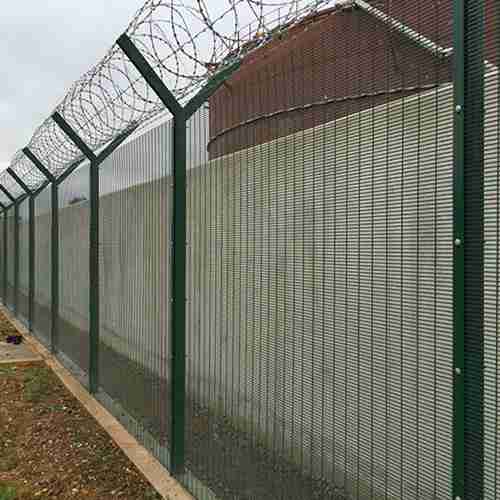
Anti-Climb Design for airport fence

To further deter intruders, airport fencing often incorporates features that make it difficult to climb. This may include angled or curved tops, as well as additional barriers such as barbed wire or razor wire.

To maintain airport security and prevent unauthorized access to sensitive areas, an effective anti-climbing system should be designed for airport fences.

Height and Material: The fence should be tall enough to deter climbing attempts. A height of at least 8 to 10 feet is recommended. Additionally, the material should be robust and difficult to grip or cut, such as chain-link fencing topped with razor wire or barbed wire.

Angled Topping: Installing angled or curved toppers on the fence can make it more challenging for intruders to climb over. This can include angled extensions, overhangs, or rotating spikes that make it difficult to gain a foothold.

Smooth Surfaces: Smooth surfaces make it harder for climbers to get a grip. Consider using smooth materials or adding anti-climb paint to the surface of the fence.

Mesh Size: Opt for a smaller mesh size for chain-link fencing to prevent footholds or handholds. This makes it difficult for individuals to climb or grip the fence.

Ground Clearance: Ensure that there is minimal ground clearance to prevent individuals from crawling under the fence. Installing concrete footings or burying the fence underground can help mitigate this risk.

Surveillance and Lighting: Proper lighting and surveillance cameras along the perimeter can deter climbing attempts and provide early detection of any suspicious activity.

Regular Maintenance: Regular inspections and maintenance of the fence are essential to ensure its effectiveness. Repair any damages or weaknesses promptly to prevent vulnerabilities that intruders could exploit.

Integration with Other Security Measures: The anti-climb fence should be part of a comprehensive security system that includes access control, perimeter intrusion detection, and patrols by security personnel.

7.3 Strong and Durable Materials

Airport fences are constructed from robust materials such as steel or aluminum to withstand potential impacts and attempts at breaching. These materials also resist corrosion, ensuring longevity even in harsh environmental conditions.

Airport fencing requires materials that are not only strong and durable but also provide security and safety. Here are some commonly used materials for airport fencing:

Steel: Steel fencing is exceptionally strong and durable, providing high levels of security. Steel fences can be made in various designs, including ornamental styles, to enhance the aesthetic appeal of the airport perimeter.

Concrete: Concrete walls or barriers are often used in conjunction with other fencing materials for added security. They provide a formidable barrier against unauthorized access and vehicle intrusion.

Barbed Wire: Barbed wire is often added to the top of fences for additional security. It acts as a deterrent against climbing and can be effective in preventing unauthorized entry.

7.4 Perimeter Intrusion Detection Systems (PIDS)

Many airport fences are equipped with advanced sensors and alarms that detect any attempts to breach the perimeter. These systems can include vibration sensors, motion detectors, and surveillance cameras, alerting security personnel to any unauthorized activity.

Perimeter Intrusion Detection Systems (PIDS) are a crucial component of airport security, especially in the context of fencing. The primary purpose of these systems is to detect and deter unauthorized individuals or vehicles attempting to breach the airport perimeter. Here’s an overview of PIDS used in airport fencing:

Fence Sensors: These are sensors integrated into the airport’s perimeter fencing. They can include various types such as:

Vibration Sensors: These detect disturbances along the fence caused by climbing or cutting attempts.

Microwave Sensors: These emit microwave signals along the fence and detect disruptions in the pattern caused by intruders.

Fiber Optic Sensors: Fiber optic cables installed along the fence detect disturbances in light patterns caused by intruders.

Video Surveillance: CCTV cameras are strategically placed along the perimeter fence to provide visual monitoring. Advanced video analytics software can be employed to detect suspicious activities such as unauthorized persons loitering near the fence or attempting to breach it.

7.5 Integration with Security Systems

Airport fencing is often part of a comprehensive security infrastructure that includes surveillance cameras, motion detectors, and other monitoring technologies. These systems are integrated to provide real-time monitoring and response capabilities.

7.6 Regulatory Compliance

Airport fencing must adhere to stringent regulations and standards set by aviation authorities and government agencies. These regulations dictate factors such as fence height, materials, and security features to ensure adequate protection against potential threats.

8.Frequently asked question about airport fencing

8.1 How much does it cost to install airport fencing?

The cost of installing airport fencing can vary significantly based on various factors such as the size of the airport, the type of fencing material used, the terrain, local labor costs, and any additional security features required. Generally, airport fencing is more specialized and durable compared to regular fencing due to security needs.

For a rough estimate, the cost of installing airport fencing can range from $10 to $30 per linear foot. However, this is a very broad range and the actual cost can be higher depending on the specifics of the project.

Additionally, there may be other expenses such as gates, security features like intrusion detection systems, surveillance cameras, lighting, and ongoing maintenance costs.

8.2 Can airport fencing withstand extreme weather conditions?

Airport fencing is typically designed to withstand a variety of weather conditions, including extreme ones. However, the specific resilience of the fencing depends on various factors such as the materials used, the design of the fencing, and the local climate.

Here are some considerations regarding airport fencing and extreme weather conditions:

Material Selection: Airport fencing is often constructed using durable materials such as steel, aluminum, or high-grade plastics. These materials are chosen for their strength and ability to withstand adverse weather conditions.

Design and Construction: The design and construction of airport fencing take into account factors like wind load, snow load, and other environmental stresses. Fencing systems are engineered to meet specific standards and codes to ensure they can withstand extreme weather events.

Maintenance: Regular maintenance of airport fencing is essential to ensure its integrity over time. This includes inspections for damage, corrosion, or other signs of wear and tear that could compromise the fencing’s ability to withstand extreme weather.

Local Climate: The design and specifications of airport fencing may vary depending on the local climate conditions. For example, fencing in areas prone to hurricanes or tornadoes may have different requirements compared to fencing in regions with heavy snowfall or high winds.

9.Conclusion

The conclusion regarding airport fencing is that it is a crucial component of airport security infrastructure. Fencing serves as a physical barrier to unauthorized access, helping to prevent potential security breaches and ensuring the safety of passengers, personnel, and aircraft.

However, while fencing is an important measure, it should be part of a comprehensive security strategy that includes surveillance systems, access controls, and personnel training. Additionally, the design and maintenance of airport fencing must consider factors such as perimeter length, terrain, local regulations, and potential threats.

Overall, effective airport fencing plays a vital role in enhancing security and safeguarding airport facilities against various risks.

Leave a Comment

Your email address will not be published. Required fields are marked *

Say Hello!

Get In Touch With Us

Office Address

Hanwang Road, Anping county, Hebei provine, China