
Table of Contents
1. What is paladin mesh panel fence?

Paladin typically refers to a type of fencing system that is known for its strength, durability, and often ornamental design. It’s commonly used for security and perimeter fencing. Mesh panel fencing, on the other hand, generally refers to fencing constructed using wire mesh panels.
This type of fence may be used in various applications, including residential, commercial, or industrial settings where security and aesthetics are both important considerations.
2. Features of paladin mesh panel fence
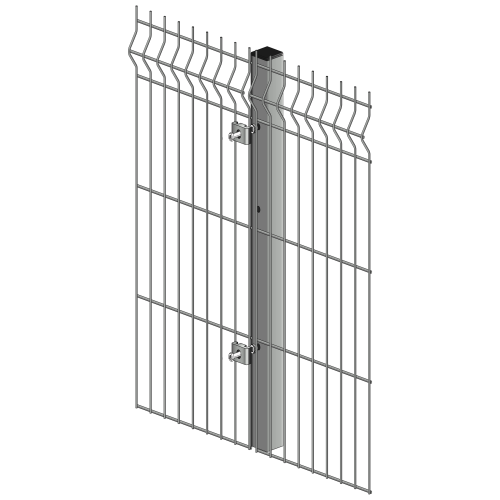
Paladin mesh panel fences are a type of fencing system that consists of panels made from interconnected horizontal and vertical wires, creating a mesh-like pattern. These fences are commonly used for various purposes, including security, privacy, and decorative applications. Here are some features of mesh panel fences.
2.1 Material
The material of a paladin mesh panel fence typically consists of galvanized steel. Galvanized steel is a type of steel that has been coated with a layer of zinc to protect it from corrosion. This coating helps to increase the fence’s durability and resistance to rust, making it suitable for outdoor applications.
2.2 Mesh Design
The mesh pattern is crucial for security and aesthetics. It should be designed to prevent climbing or cutting while maintaining visibility. The Paladin mesh panel fence may have a specific mesh pattern unique to its design.
Paladin mesh panel fences typically have vertical steel or aluminum bars with decorative finials or spear tops. The spacing between the bars should be designed to balance security and visibility. Closer spacing provides more security but reduces visibility.
2.3 Panel Height and Width
The height and width of the paladin fence panels contribute to the overall security and appearance of the fence. Paladin mesh panel fences may come in standard sizes or offer customization options.
The height and width of paladin style fencing can vary based on the specific model and manufacturer. Paladin is a brand that produces high-security mesh panel fencing systems commonly used for perimeter security, industrial sites, and other applications.
2.4 Coating/Finish
The coating or finish of paladin mesh panel fence typically depends on the specific product and the manufacturer. However, in general, Paladin mesh panel fences are often coated or finished with materials that provide durability and corrosion resistance.
Galvanization involves applying a protective zinc coating to the steel, which helps prevent corrosion and rust. This is a common and effective finish for outdoor applications.
Powder coating is a dry finishing process where a fine powder is applied to the surface of the fence panels. The coated panels are then cured in an oven, creating a durable and attractive finish. Powder coating provides excellent resistance to weathering, chipping, and fading.
Polyester coatings are often used for additional protection against the elements. These coatings are applied as a liquid and then cured to form a tough and resilient finish.
2.5 Security Features
Paladin mesh fencing is often chosen for their security properties. Look for features like anti-climb designs, tamper-resistant fasteners, and reinforced panel edges.
2.6 Installation System
Consider the installation system, as paladin fencing come with specific post and fixing systems that affect ease of installation and overall stability.
2.7 Gate Options
If the paladin mesh panel fence includes gates, check their design, locking mechanisms, and compatibility with the overall fence system.
2.8 Compliance with Standards
Ensure that the paladin mesh panel fence complies with relevant industry and safety standards. This can be important for regulatory compliance and the overall effectiveness of the fence.
2.9 Customization Options
Some paladin mesh panel fences offer customization options in terms of color, design, or additional features. Verify whether the Paladin mesh panel fence provides customization to meet specific project requirements.
3. The heights of paladin mesh panel fence
The height of paladin mesh panel fence can vary depending on the specific product or manufacturer. Paladin mesh panel fences are commonly used for security and boundary purposes. Standard heights for paladin mesh panel fences often range from 1.8 meters (approximately 6 feet) to 2.4 meters (approximately 8 feet).
4. The color of paladin mesh panel fence
The color of paladin mesh panel fence can vary depending on the manufacturer and the specific product line. Paladin mesh panel fences are typically available in a range of colors to suit different preferences and applications.
Common colors for these types of fences include black, green, white, and sometimes other neutral tones.
5. What is the welding method of the paladin mesh panel fence?

In general, welded mesh panel fences are constructed by joining individual wires or mesh elements through welding. Common welding methods for mesh panel fences include.
5.1 Spot Welding Paladin Mesh Panel Fence
Spot welding paladin mesh panel fence involves using a spot welding technique to join the paladin mesh panels together securely. Paladin mesh panels are commonly used in fencing for their durability and security features.
Position the welding electrodes on both sides of the joint where two paladin mesh panels meet. Activate the spot welding machine to create a series of spot welds along the seam. Move systematically along the joint, ensuring consistent spacing between spot welds.
After completing the spot welding, inspect the welds to ensure they are strong and secure. Check for any inconsistencies or defects.
Continue the process for all joints where paladin mesh panels meet. Ensure that each joint is adequately welded to provide a strong and stable fence structure.
5.2 MIG Welding Paladin Mesh Panel Fence
MIG welding is a common method for joining metals, and it can be used for welding paladin mesh panel fences. Paladin mesh panel fences typically consist of vertical steel bars welded to horizontal steel bars to form a sturdy and secure barrier.
Start MIG welding the joints, focusing on creating strong and uniform welds. Weld both sides of each joint for added strength. Maintain a steady welding speed and consistent arc length.
Inspect the welds for any defects or inconsistencies. Address any issues by grinding or re-welding as needed. Repeat the process for each paladin mesh panel, ensuring proper alignment and spacing.
5.3 TIG Welding Paladin Mesh Panel Fence
Tungsten Inert Gas (TIG) welding is a popular welding process that uses a non-consumable tungsten electrode to create the weld.
Ensure that the paladin mesh panels are clean and free from any contaminants, such as rust, paint, or dirt. Make sure the panels are properly aligned and fit together securely.
Adjust the TIG welding machine settings based on the material thickness and type. Set the appropriate current, voltage, and gas flow rate.
Use tack welds to temporarily secure the paladin security fences in the desired position before making the final welds. This ensures proper alignment and minimizes distortion.
TIG welding requires a steady hand and controlled movement. Maintain a consistent travel speed and torch angle to achieve even and strong welds.
Start the weld at one end of the joint and progress systematically to the other end.
Ensure that the joints overlap correctly, and the welding torch is positioned at the right angle to create a strong, durable weld.
6. Applications of paladin mesh panel fence
Paladin mesh panel fence is a type of security fencing system that is known for its strength, durability, and aesthetic appeal. Here are some common applications of Paladin mesh panel fences.
6.1 Perimeter Security
Perimeter security is a crucial aspect of protecting facilities, properties, and assets. Mesh panel fences are a popular choice for perimeter security due to their durability, visibility, and versatility. The paladin mesh panel fence typically consist of welded wire mesh panels that are interconnected to form a barrier.
6.2 Critical Infrastructure Protection
Paladin mesh panel fences are often employed to secure critical infrastructure such as power plants, water treatment facilities, telecommunication sites, and transportation hubs. The robust design of these fences helps prevent unauthorized access and protects essential services.
6.3 Public Spaces and Parks
In urban areas, paladin mesh panel fences can be used to secure public spaces, parks, and recreational areas. The design of the fence allows for a secure boundary without compromising the visibility of the surroundings.
6.4 Schools and Educational Institutions
Educational institutions, including schools and universities, may use paladin mesh panel fences to enhance security on their campuses. The combination of strength and aesthetics makes these fences suitable for maintaining a secure environment without appearing overly imposing.
6.5 Airport Perimeters
Airports often require high-security fencing to protect sensitive areas and control access. Paladin mesh panel fences can be utilized for airport perimeters to ensure the security of air transportation facilities.
6.6 Correctional Facilities
Paladin mesh panel fences are also employed in correctional facilities to create secure perimeters. The robust construction of these fences helps deter escape attempts and ensures the containment of inmates.
6.7 Data Centers and IT Facilities
Data centers and IT facilities house valuable and sensitive information. Paladin mesh panel fences can be installed to provide an additional layer of security and prevent unauthorized access to these critical infrastructure components.
6.8 Sports Venues and Stadiums
Large sports venues and stadiums may use paladin mesh panel fences to establish secure perimeters. The design of the fence allows for crowd control and helps in managing access to different sections of the venue during events.
6.9 Utilities and Energy Installations
Utilities such as substations, pipelines, and energy installations often require robust security measures. Paladin mesh panel fences are suitable for protecting these critical installations from unauthorized access and potential threats.
6.10 Commercial and Retail Properties
Paladin mesh panel fences can be used to secure commercial and retail properties, especially in areas where a balance between security and aesthetic appeal is important.
7. Installation of paladin mesh panel fence
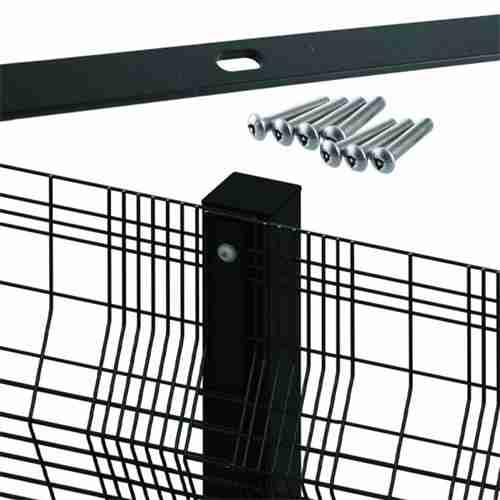
The installation of a paladin mesh panel fence involves several steps to ensure proper assembly and stability. Paladin mesh panel fences are commonly used for security and boundary purposes. Here’s a general guide for installing a paladin mesh panel fence.
7.1 Planning
Determine the paladin mesh panel fence line and mark the positions for the fence posts. Check local regulations and obtain any necessary permits before starting the installation.
7.2 Digging Post Holes
Dig holes for the fence posts. The depth and diameter of the holes will depend on the height and type of fence, as well as soil conditions. Typically, holes should be at least 2 feet deep for stability.
7.3 Setting Posts
Place gravel at the bottom of each post hole for drainage. Insert the fence posts into the holes, ensuring they are plumb (use a spirit level to check). For added stability, fill the holes with concrete or a post mix. Follow the manufacturer’s instructions for mixing and setting times.
7.4 Attaching Panels
Once the posts are set and the concrete has cured, attach the paladin mesh panels to the posts. Use screws or bolts to secure the panels to the posts. The attachment method may vary based on the specific design of the panels and posts.
7.5 Aligning Panels
Ensure the paladin fences are aligned properly and level. Use a string line to maintain a straight fence line. Make any necessary adjustments to the panels or posts to achieve a uniform and straight appearance.
7.6 Securing the Top Rail
Securing the top rail of paladin mesh panel fence is important for maintaining the fence’s stability, security, and overall effectiveness.
Ensure that you have the appropriate materials for securing the top rail. This may include screws, bolts, nuts, and other fasteners. Before securing the top rail, inspect the entire fence to identify any damage or issues. Make sure all other components, such as posts and panels, are in good condition.
Place the top rail on the designated part of the fence, ensuring it is aligned correctly with the posts and panels. To prevent the material from splitting or cracking, pre-drill holes where the screws or bolts will be inserted. Make sure the holes are appropriately spaced along the top rail.
Use screws, bolts, or other appropriate fasteners to attach the top rail to the fence posts. Make sure the fasteners are tightened securely to provide stability.
Depending on the level of security required, you may want to consider using security fixings such as anti-tamper screws or nuts. These make it more difficult for unauthorized individuals to remove the top rail.
To further enhance security, consider using locking nuts. These nuts have a design that resists loosening, providing an extra layer of protection against tampering.
7.7 Finishing Touches
Install post caps on the top of each paladin fence post for finished look. Check all connections and make any final adjustments to ensure the fence is stable and secure.
8. Conclusion
In conclusion, the paladin mesh panel fence demonstrates several qualities that make it a notable choice for various applications. Its robust construction, often utilizing high-quality materials, ensures durability and longevity.
The mesh design not only enhances security but also provides visibility, striking a balance between safety and aesthetics. Installation and maintenance processes are generally straightforward, contributing to its practicality.
The fence’s adaptability to different environments, along with customizable options, adds to its appeal for diverse settings, such as residential, commercial, or industrial areas. The product’s compliance with industry standards and regulations further emphasizes its commitment to safety and quality.
