Table of Contents
1. Chain link fencing materials

Chain link fenceing are commonly used for various purposes, including residential, commercial, and industrial applications. The materials needed to construct a chain link fence typically include.
1.1 Galvanized Steel
Galvanized steel is commonly used in the construction of chain link fencing. Galvanization is a process in which a protective zinc coating is applied to steel to prevent corrosion and increase its durability.
This coating helps to protect the steel from rust and other environmental elements, making it suitable for outdoor applications like fencing.
Galvanized steel is highly resistant to corrosion. The zinc coating acts as a barrier, preventing moisture and other corrosive elements from coming into direct contact with the underlying steel.
The galvanization process enhances the overall durability of the steel, making it more resistant to scratches, impacts, and other forms of wear and tear. This is crucial for fencing materials that need to withstand the rigors of outdoor use.
1.2 Aluminum
Aluminum chain link fencing is a type of fencing that uses aluminum material for the construction of the chain-link mesh. Aluminum is a popular choice for fencing due to its durability, corrosion resistance, and low maintenance requirements.
Aluminum is highly resistant to corrosion, making it an ideal material for outdoor applications. This property ensures that the fencing can withstand exposure to various weather conditions without rusting.
Aluminum is a sturdy material, providing strength to the chain-link fence. This makes it suitable for security purposes, as it can withstand pressure and impacts.
Aluminum chain link fencing requires minimal maintenance. Unlike iron or steel, aluminum does not rust, so there’s no need for rust-resistant coatings. Periodic cleaning to remove dirt and debris is usually sufficient to maintain its appearance.
Aluminum is lighter than steel, which can make installation easier. The lightweight nature of aluminum does not compromise its strength, making it a practical choice for both residential and commercial fencing.
1.3 Vinyl-Coated Steel
Vinyl-coated steel chain link fencing is a type of fencing that combines the durability of steel with the added protection and aesthetic appeal of a vinyl coating. Chain-link fencing itself is a popular and cost-effective choice for various applications, including residential, commercial, and industrial purposes.
The steel core of the chain-link fence provides strength and durability, making it a long-lasting option for securing properties.
The steel core is typically galvanized to protect against rust and corrosion. The vinyl coating adds an additional layer of protection, making the fence more resistant to the elements.
The vinyl coating comes in various colors, providing a more visually appealing appearance compared to traditional galvanized steel chain-link fences. This allows homeowners and property owners to choose a color that complements their surroundings.
2. What is the wire diameter of chain link fencing?
The wire diameter of chain link fencing can vary depending on the specific type and purpose of the fence. However, typical chain link fencing are constructed using wire with diameters ranging from around 11 to 12.5 gauge (about 0.113 to 0.080 inches or 2.87 to 3.18 mm).
The gauge measurement is a standard way to denote the thickness or diameter of the wire used in fencing. The specific diameter can also be influenced by factors such as the fence’s intended use, security requirements, and the gauge of the wire chosen for installation.
The time required to install a chain link fence can vary significantly based on several factors, including the length of the chain link fencing, terrain, soil conditions, local regulations, and the skills of the installers.
On average, a team of experienced chain link fencing installers can typically install a chain link fence at a rate of around 25-35 linear feet per hour. This estimate accounts for the entire installation process, including setting the posts, attaching the chain link fabric, installing gates, and adding necessary hardware.
For instance, a smaller residential project might take a day or two to complete, while larger projects covering several hundred feet could take several days or even weeks.
It’s essential to consider factors such as ground preparation, the number of gates, terrain challenges, and any additional customization required, as these can all impact the installation time.
4. How to keep a chain link fence from being cut?
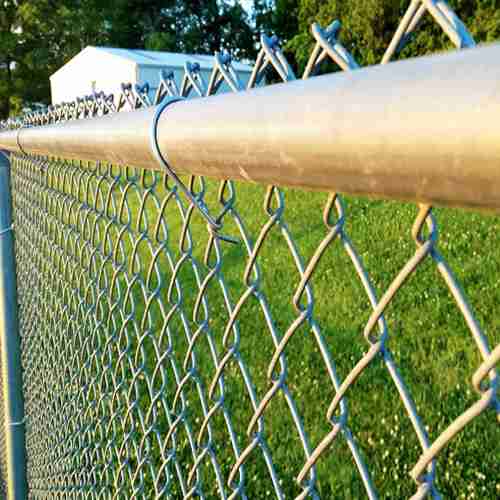
Preventing a chain link fence from being cut entirely might be challenging, but there are measures you can take to discourage or make it more difficult for someone to cut through it.
4.1 Use higher-quality materials
Improving the security of a chain-link fence involves selecting higher-quality materials and employing additional measures to deter cutting or vandalism. While no fence is completely impenetrable, you can take steps to make it more resistant to cutting and damage.
Opt for a chain-link fence with a thicker gauge wire. A higher gauge number indicates a thinner wire, so choosing a lower gauge (e.g., 9 or 10 gauge) can provide more strength.
Galvanized steel is coated with zinc, making it more resistant to corrosion and rust. Vinyl-coated chain-link fences add an extra layer of protection against weathering and cutting attempts.
Integrate privacy slats or screening into the chain-link fence. This not only enhances privacy but also makes it more difficult for intruders to see and access the fence for cutting.
4.2 Install security cameras
Installing security cameras is a good step to enhance the security of your property and deter potential trespassers or vandals.
Identify vulnerable areas along the chain-link fence where potential intruders may attempt to cut through. Consider installing cameras at key entry points, corners, and areas with limited visibility.
Choose weather-resistant and durable cameras suitable for outdoor use. Opt for cameras with infrared capabilities for nighttime surveillance. Consider cameras with motion detection to alert you when someone is near the fence.
4.3 Camera Placement
Install cameras at a height that is difficult for intruders to reach and tamper with.
Position cameras to cover the entire length of the chain-link fence, overlapping to eliminate blind spots. Ensure cameras have a clear line of sight without obstructions.
4.4 Barbed wire or razor wire
Both barbed wire and razor wire can be effective in enhancing the security of a chain-link fence by making it more difficult to cut or climb.
Barbed wire consists of twisted strands of wire with barbs spaced at intervals.
It is designed to deter trespassers by causing discomfort or injury if they attempt to climb over or through the fence.
While it provides a level of security, it may not be as intimidating or as effective a deterrent as razor wire.
Razor wire, also known as concertina wire, has sharp blades or barbs that are much more effective in deterring intruders. It is generally considered a more formidable deterrent due to its sharper and more threatening appearance.
Razor wire is often used in high-security areas, military installations, and prisons.
When choosing between barbed wire and razor wire, consider the level of security required, the potential threat, and any legal or safety considerations.
4.5 Anti-cut strips
Razor ribbon or razor wire is a popular choice for enhancing the security of fences. It consists of sharp-edged metal blades or wires that can deter and slow down attempts to cut through the fence. It’s important to install it properly and follow any local regulations regarding its use, as razor wire can be dangerous.
Some companies offer fence toppers specifically designed to deter cutting. These may include spikes, rotating blades, or other features that make it difficult for someone to cut through the fence without risking injury.
Anti-cut strips are metal strips that are attached to the top of the fence, making it more challenging for individuals to cut through the chain links. These strips often have serrated edges or a hardened surface to resist cutting tools.
4.6 Regular inspection and maintenance
Regular inspection and maintenance are essential to prevent a chain-link fence from being cut or damaged.
Perform regular visual inspections of the entire fence. Look for any signs of damage, wear, or weak points. Check for loose or damaged fittings, bolts, and nuts.
Trim any vegetation around the fence regularly. Overgrown plants can provide cover for potential vandals or intruders and may make it easier for them to cut or damage the fence without being noticed.
5. Factors that affect the cost of chain link fence installation
Several factors can influence the cost of installing a chain link fence. These factors can vary depending on the location, the size of the project, and specific requirements. Here are some key factors that can impact the cost of chain link fence installation.
5.1 Fence Length and Height
The longer the fence, the more materials (such as chain-link fabric, posts, rails, and fittings) will be required. This directly influences the overall cost of materials.
Installing a longer fence typically requires more labor hours. Labor costs can include excavation, setting posts, attaching the chain-link fabric, and other installation tasks. Contractors often charge based on the time and effort required for the job.
Taller fences require more materials, especially longer posts and additional chain-link fabric. The height of the fence directly impacts the amount of material needed. Installing a taller fence may require more labor and specialized skills.
5.2 Material Quality and Gauge
Chain link fences can be made from various materials, including galvanized steel, aluminum, and vinyl-coated steel. Galvanized steel is the most common and affordable option, but it may not be as durable as other materials.
Aluminum is lightweight and resistant to corrosion, while vinyl-coated steel offers additional protection against rust and can be more aesthetically pleasing. The choice of material affects the overall durability, appearance, and maintenance requirements of the fence.
The gauge of the wire used in the chain link fabric is a crucial factor. The gauge represents the thickness of the wire, and a lower gauge number indicates a thicker wire. Thicker wires are typically more robust and durable, but they can also be more expensive.
Common gauge sizes for chain link fencing range from 9 to 12. A lower gauge (e.g., 9 or 10) is thicker and more robust, suitable for heavy-duty applications like security fencing.
5.3 Terrain and Site Preparation
Terrain and site preparation can significantly impact the cost of chain link fence installation. Various factors related to the landscape and site conditions can affect the complexity of the installation process, leading to additional costs. Here are some key factors to consider:
Installing a fence on a slope may require additional materials, such as longer posts and special techniques to ensure the fence is level. This can increase labor costs and material expenses.
The presence of trees, shrubs, or other vegetation may need to be cleared before installation. Clearing vegetation adds extra labor and equipment costs. Additionally, if there are large obstacles to remove, such as tree stumps or rocks, it can increase the overall cost.
5.4 Permits and Regulations
The cost of chain link fence installation can be influenced by various permits and regulations. These factors vary depending on your location and local government guidelines.
In many areas, you may need to obtain a permit before installing a fence. Permit fees can vary widely depending on the location and the type of permit required. These fees can add to the overall cost of the installation.
Local zoning regulations dictate where and how structures, including fences, can be installed on a property. Some areas may have specific rules about fence height, materials, and distance from property lines.
Before installing a fence, you may need to have a property line survey done to ensure that the fence is installed within your property boundaries. This survey can be a requirement in some areas and may add to the overall cost.
5.5 Labor Costs
The complexity of the installation process can affect labor costs. If the terrain is uneven or there are obstacles to work around, the installation may require more time and effort, leading to higher labor costs.
The size of the fence, both in terms of height and length, directly influences the amount of labor required. Larger fences take more time and effort to install, resulting in higher labor costs.
The type of soil and ground conditions at the installation site can affect labor costs. Rocky or hard soil may require additional labor for digging holes and setting posts, potentially increasing the overall installation time and cost.
Ease of access to the installation site also plays a role. If the site is difficult to reach or if there are logistical challenges, it may require more time and effort from the installation crew, leading to higher labor costs.
5.6 Additional Features or Customization
Additional features or customization can significantly affect the cost of chain-link fence installation. The basic cost of installing a chain-link fence is influenced by factors such as the length of the fence, the height of the fence, the type of chain-link fabric used, and the labor costs in your area.
If you want to enhance privacy by adding slats or screens to the chain-link fence, this will incur additional costs. These privacy features come in various materials and colors.
The standard galvanized steel chain-link fence is the most common, but you can choose additional coatings or finishes for aesthetic or corrosion resistance reasons. Vinyl coating or powder coating in different colors can add to the cost.
5.7 Accessibility
The accessibility of the installation site can indeed impact the cost of chain-link fence installation. Accessibility refers to how easy or difficult it is for contractors to access the location where the fence needs to be installed.
If the installation site is in a remote or challenging location, it may require more effort and time for contractors to transport materials and equipment to the site. Difficult terrain, such as steep slopes or rocky ground, can also increase labor and equipment costs.
The proximity of the installation site to suppliers of chain-link fence materials can affect costs. If the site is far from the suppliers, transportation costs for materials may be higher.
If the installation site has obstacles such as trees, rocks, or existing structures that need to be cleared or worked around, it can increase labor costs. Clearing the area and preparing the ground for installation may require additional time and effort.
5.8 Timeline and Seasonality
If you need the chain link fence installed urgently, contractors may charge higher prices for expedited services. This urgency can be due to specific events, security concerns, or other time-sensitive reasons.
During peak seasons when contractors are in high demand, prices may rise. If you can be flexible with your installation timeline, you may be able to negotiate better rates during off-peak periods.
Harsh weather conditions, such as extreme heat, heavy rain, or cold temperatures, can affect the installation process. Contractors may need to take extra precautions or reschedule work, which can impact labor costs. Additionally, adverse weather conditions may lead to delays, potentially increasing the overall project cost.
6. Chain link fencing fabric coating process
The process of coating chain link fencing fabric involves several steps to ensure durability, corrosion resistance, and longevity. Here’s a typical procedure for coating chain link fence fabric.
6.1 Material Preparation
Raw materials are received and inspected for quality. The wire may go through cleaning processes to remove any impurities or contaminants that could affect coating adhesion.
Coating chain link fencing fabric involves several steps to ensure durability, corrosion resistance, and aesthetic appeal.
6.2 Galvanization (Optional)
Galvanization is a crucial process in the coating of chain link fencing fabric. It involves applying a protective zinc coating to the steel wire used in the fabrication of the chain link fence. This process helps to prevent corrosion and rust, enhancing the durability and longevity of the fence.
The steel wire used for making the chain link fencing is cleaned thoroughly to remove any impurities, such as rust, oil, or mill scale. This cleaning process ensures better adhesion of the zinc coating.
The cleaned steel wire is then dipped or passed through a bath of molten zinc. This bath is usually maintained at a high temperature (around 450°C or 850°F) to keep the zinc in a liquid state. The process may utilize either hot-dip galvanization or electro-galvanization methods.
Hot-Dip Galvanization: The steel wire is fully immersed in the molten zinc bath. The high temperature allows the zinc to metallurgically bond with the surface of the steel, creating a protective layer.
Electro-Galvanization: This method involves passing an electric current through a zinc solution, allowing zinc ions to bond to the steel wire’s surface. It forms a thinner but effective protective coating.
6.3 Curing or Setting the Coating
After the coating application, the wire is passed through an oven or heating chamber to cure and set the coating onto the wire. This process helps the coating adhere firmly to the wire and ensures it forms a durable, protective layer.
6.4 Cooling and Quality Check
The coated wire is cooled down after the curing process. Quality control measures are taken to check the thickness, uniformity, adhesion, and appearance of the coating. This might involve visual inspection, thickness measurement tools, and other testing methods.
6.5 Cutting and Winding
The coating process for chain link fencing fabric involves applying a protective layer to the metal wires that form the chain-link pattern. The coating serves to enhance durability, corrosion resistance, and aesthetic appeal.
The process typically involves cutting the wire to the desired length and then coating it before winding it into the familiar chain-link configuration.
Raw metal wire, usually made of steel or aluminum, is cut to the required length based on the specifications of the fence. High-quality wire cutting machines ensure precise and consistent lengths.
The wire may undergo a cleaning process to remove any dirt, oil, or residues that could affect the coating adhesion. Pre-treatment processes like degreasing or chemical treatments might be applied to enhance coating adhesion and corrosion resistance.
6.6 Packaging and Shipping
Once the coating process is complete and the fabric passes inspection, it is rolled or folded according to specific dimensions. The packaging method might vary depending on the company or manufacturer, but it often involves.
The fabric is rolled tightly and secured with appropriate materials to prevent unraveling during shipping. In some cases, especially for smaller-sized chain link fence fabric, folding might be preferred over rolling.
Once packaged and palletized, the chain link fencing fabric is loaded onto trucks, containers, or other modes of transportation based on the shipping requirements. Freight carriers or logistics companies are often contracted for the transportation process.
7. Conclusion
Chain link fencing offers several advantages, making it a popular choice for various applications. Its durability, cost-effectiveness, low maintenance requirements, and versatility make it an appealing option for both residential and commercial purposes. The installation process is relatively straightforward, and its design allows for visibility while still providing security and containment.
In conclusion, chain link fencing remains a practical and widely used choice for many applications due to its durability, affordability, low maintenance, and adaptability. Despite some limitations in privacy and aesthetics, its overall benefits make it a preferred option for various fencing needs.