


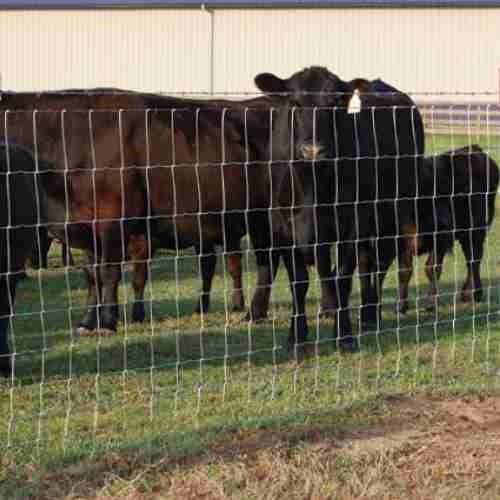
Designing the placement and layout of livestock fences requires careful consideration of various factors such as the type of livestock, terrain, available resources, and management practices. Here are some key considerations and tips for planning livestock fence placement and layout.
5.1 Identify Property Boundaries
Identifying property boundaries for livestock fencing placement and layout involves a series of steps that ensure the fencing is legally placed and effectively serves its purpose in managing livestock.
Start by reviewing your property deed and any land records or surveys that define your property boundaries. These documents should provide detailed information on the limits of your land.
If your property boundaries are unclear or disputed, it may be necessary to have a professional land survey conducted. A licensed land surveyor can accurately determine and mark the boundaries of your property.
Before planning your fence layout, check with your local zoning office or municipal planning department to understand any regulations related to fencing. There may be specific requirements or restrictions on fence height, materials, and setback from property lines.
If your fence will be near or on a shared property boundary, discuss your plans with your neighbors to prevent any disputes. It’s often required or advisable to get agreements in writing.
With clear property boundaries established, you can begin planning your livestock fence layout. Consider the needs of your livestock, the topography of your land, access points, water sources, and grazing areas.
5.2 Understand Livestock Behavior
Understanding livestock behavior is crucial for designing effective and safe fencing systems. Livestock fencing serves multiple purposes, including containing animals within a designated area, protecting them from predators, and managing their grazing patterns. The behavior of livestock, such as cattle, sheep, goats, and horses, influences the placement and layout of fencing.
Cattle: Often require sturdy fencing like barbed wire or electric fencing to contain them. They are large and can exert significant force, so the fence must be strong and tall enough to deter jumping or breaking through.
Sheep and Goats: Known for their ability to climb and jump, these animals may require taller fences with smaller gaps. Electric netting or woven wire fences can be effective.
Horses: Require fences that are both visible and strong. Smooth wire, wooden fences, or PVC railings are often used to reduce the risk of injury.
Rotation Grazing: Fencing layout can be designed to facilitate rotational grazing, which involves moving livestock between different pastures. This helps in managing pasture health and maximizing forage utilization.
Water Access: Fences should be laid out to ensure animals have access to water sources without risking escape or entering prohibited areas.
5.3 Select Suitable Fence Type
Selecting a suitable fence type for livestock involves considering several factors including the type of livestock, terrain, budget, and management goals. Here’s a guide to help you decide on the right fencing type based on common livestock types and their specific needs.
5.3.1 Cattle
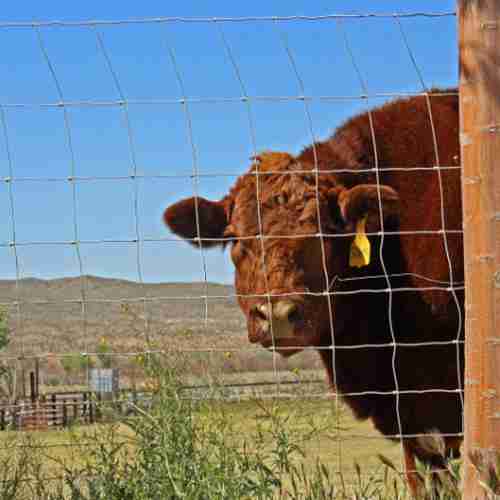
Electric Fences: Effective for boundary and interior use. Requires minimal maintenance and can be a cost-effective solution.
Barbed Wire: Traditional choice for perimeter fencing. Requires more maintenance and can cause injury to animals.
High Tensile Wire: A non-electric or electrified option that’s durable and requires less maintenance than barbed wire.
Sheep and Goats
Woven Wire Fencing: Also known as sheep or goat fence, it has tight spacing near the ground to prevent animals from squeezing through.
Electric Net Fencing: Portable, versatile, and effective for rotational grazing. Keeps out predators effectively.
High Tensile Electric Fencing: Can be used with several strands to effectively contain sheep and goats.
5.3.2 Horses
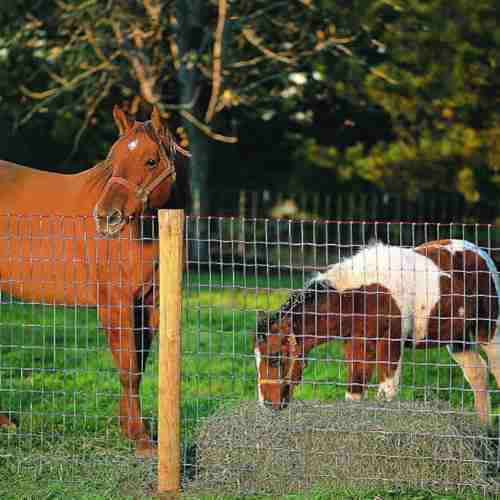
Wooden Fences: Traditional, aesthetically pleasing but requires significant maintenance and can be expensive.
PVC Rail: Requires less maintenance than wood and is safer in case of impact but can be costly.
Electric Tape or Rope: Visible and less dangerous if a horse runs into it. Requires maintenance to keep tension.
5.3.3 Pigs
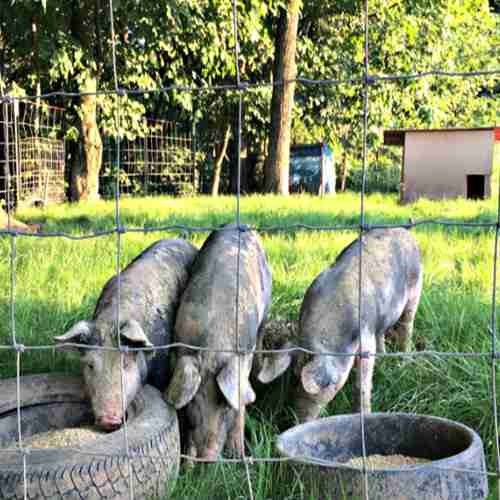
Electric Fencing: Effective for containing pigs, especially if the bottom wire is kept close to the ground.
Hog Panels: Sturdy and secure, but more permanent and expensive than electric fencing.
5.3.4 Poultry

Poultry Netting (Chicken Wire): Effective for creating pens but does not offer predator protection.
Electric Poultry Fencing: Portable and offers protection from ground predators.
5.4 Plan Grazing Areas
Planning grazing areas and deciding on livestock fencing placement and layout requires careful consideration of several factors to ensure the health of the livestock, the sustainability of the pasture, and the efficiency of the operation.
Understand the land’s topography, including slopes, flat areas, and potential water runoff paths. This will influence where fences can be placed and how water can be managed. Different soils support different types of vegetation and have varying water retention capabilities, affecting the type of forage available and how often areas can be grazed.
Identify natural water sources or the need for artificial ones. Water access is critical for livestock and can dictate the layout of grazing areas.
5.5 Determine Grazing Strategy
This involves dividing the pasture into smaller areas (paddocks) and rotating livestock through them to allow for regrowth in resting paddocks. It requires more fencing but leads to better pasture management and healthier livestock.
Livestock have continuous access to a large area. This requires less fencing but can lead to overgrazing and soil compaction.
5.6 Plan Fencing Layout
Rectangular paddocks are more efficient than square ones due to fewer fence lines per area unit. The size depends on the number of animals, the grazing strategy, and the available forage.
Choose between permanent (wood, wire) and portable (electric netting) fences based on your grazing strategy, budget, and terrain. Electric fencing is versatile for rotational grazing. Gates should allow easy movement of livestock between paddocks and access to water. Place them at corners for efficiency and ease of use.
5.7 Water Management
Ideally, water should be accessible within 800 feet of any point in a paddock to ensure that livestock do not have to travel far, which can lead to uneven grazing. Protect waterways by fencing off riparian areas to prevent erosion and water contamination.
5.8 Infrastructure and Accessibility
Consider the placement of handling facilities like corrals and loading chutes. They should be centrally located and easily accessible from all paddocks. Ensure there are paths for moving livestock, equipment, and for maintenance activities. These should be planned to minimize disturbance to the grazing areas.
5.9 Consider Water Access
When considering water access in the context of livestock fencing placement and layout, it’s important to balance several factors to ensure that animals have adequate access to clean water, the impact on the environment is minimized, and the operation remains efficient and sustainable.
Ensure that the water source used by the livestock is protected from contamination. Fencing should be designed to prevent direct access to creeks, rivers, or ponds that can be polluted by the animals. Instead, use a piped water system or troughs to bring water to the animals.
Design the fence layout so that water points are easily accessible to all animals within a paddock. This may mean placing water troughs centrally or having multiple water points for larger paddocks. The goal is to minimize the distance any animal has to travel to get water.
If you are implementing a rotational grazing system, consider the placement of portable water troughs that can be moved as livestock are rotated through different paddocks. This system ensures that all animals have access to water without compromising the integrity of the grazing plan.
5.10 Account for Terrain
Fencing on slopes and hills requires careful consideration of fence line routing to minimize erosion and ensure stability. It’s often best to follow the contour lines of the terrain to reduce the need for extensive grading and to ensure the fence remains stable over time.
Identify natural drainage paths to avoid placing fences where water flow could undermine posts or erode fence lines. In areas with significant water flow, consider installing drainage solutions or culverts under fences to prevent water from pooling or eroding fence foundations.
Different soil types have different load-bearing capacities, which can affect post installation depth and the need for concrete footings. Sandy or loose soils may require deeper post installations or additional support to ensure stability, while clay soils may need drainage considerations to prevent waterlogging and post rot.
Soils prone to erosion may require additional measures, such as planting vegetation along fence lines or using erosion control fabrics, to maintain the integrity of the fence line over time.
Dense vegetation may need to be cleared to establish a fence line, which can impact the local ecosystem and the cost of fence installation. Consider the impact on local flora and fauna and explore options for minimizing disruption, such as selective clearing or integrating fence lines with existing tree lines.
5.11 Minimize Fence Length
Minimizing the length of fencing for livestock involves several principles and strategies aimed at efficiently enclosing the maximum area with the minimum amount of fencing material. The goal is to reduce costs while ensuring the safety and security of the animals.
For a given perimeter, a circular enclosure encompasses the largest area. However, circular fences can be challenging to construct and may not be practical for all types of livestock or terrains. These are easier to construct and adapt to different terrains.
Although they do not offer the maximum area for a given fence length compared to a circle, they are more practical and commonly used. Incorporate natural features such as rivers, hills, or tree lines into your fencing plan. This can significantly reduce the amount of fencing needed by using these natural barriers as part of the enclosure.
5.12 Gate Placement
The placement and layout of livestock fencing are critical components in the management of farmland for the containment and protection of livestock. The goal is to create a fencing system that is efficient, secure, and suitable for the specific types of animals you are raising.
5.13 Understand Your Needs
Different animals have different fencing requirements. For example, cattle may need sturdy, tall fences, while poultry requires fencing that prevents them from flying over and protects against predators.
Determine if the fence is for containment, rotational grazing, predator protection, or separation of different animal groups. The layout should consider the natural landscape. Fences should follow the contour lines of your land to reduce erosion and ensure stability.
5.14 Select the Right Fencing Type
Permanent fences are suitable for boundary lines, while temporary fences can be used for rotational grazing. Wood, wire (barbed, woven, or electric), and synthetic materials are common. Choose based on durability, cost, and the specific needs of your livestock.
5.15 Consider Predator Control
When considering predator control in relation to livestock fencing placement and layout, there are several key factors to take into account to ensure the safety of your livestock from predators such as wolves, coyotes, bears, and even smaller predators like foxes and feral dogs.
Identify which predators are most common in your area. The design of your fence may vary significantly depending on whether you are protecting livestock from large predators like bears or smaller ones like foxes.
The fence height is critical; it should be high enough to prevent predators from jumping over. For example, a fence to deter wolves might need to be 6 feet tall or higher. Consider burying the bottom of the fence or adding an apron on the ground to prevent digging predators from getting under.
Use strong materials that cannot be easily broken or bent by predators. High-tensile wire, electric fencing, and mesh wire are common choices. Electric fencing can be particularly effective as it provides a psychological barrier after an initial shock, deterring predators from attempting to breach the fence again.
The layout should encompass all areas where livestock graze, with special attention to areas near woods or other cover that predators might use. Ideally, create a buffer zone between the grazing area and potential predator hiding spots. Ensure there are no gaps or weak points where the terrain or natural obstacles might compromise the fence.
5.16 Regular Maintenance
Regular maintenance of livestock fencing is crucial to ensure the safety of animals and the efficiency of farm operations. Proper placement and layout of fences are equally important for maximizing pasture utilization and managing livestock effectively.
Conduct regular inspections of fencing to identify and repair any damage, wear, or tear. Look for broken wires, loose posts, damaged insulators (for electric fences), and any vegetation touching the fence which might ground electric fences.
Ensure wires are tensioned correctly and repair any breaks or weak spots immediately. For electric fences, check the voltage regularly to ensure it is within the effective range.
Vegetation near fences should be controlled to prevent grounding of electric fences and to reduce pressure on physical barriers. This can involve trimming grass and bushes or applying appropriate herbicides where necessary.
5.17 Budget and Resources
The planning and implementation of livestock fencing involve careful consideration of budget and resources to ensure both the safety of the animals and the efficient use of land. Here’s a general guide to consider when planning livestock fencing in terms of budget and resources:
5.18 Assessment of Needs
Different animals have different fencing requirements. For instance, cattle might need strong barbed wire or electric fencing, while poultry requires a secure mesh to prevent escape and protect from predators.
Determine if the fence is for containment, rotational grazing, or protection from predators. Each purpose may require different materials and layouts. Includes wood, barbed wire, woven wire, and rail. Prices vary widely depending on material quality and durability.
Often more affordable and easier to install than traditional fencing. It requires energizers, wires/tapes, posts, and grounding rods. Combines the benefits of wood and plastic, resistant to rot and pests but can be more expensive.
Livestock fencing is essential for maintaining the safety and security of animals while also delineating property boundaries. Different types of livestock require different fencing materials and designs based on factors like size, behavior, and potential threats. Here are some common types of livestock fencing.
6.1 Permanent fences
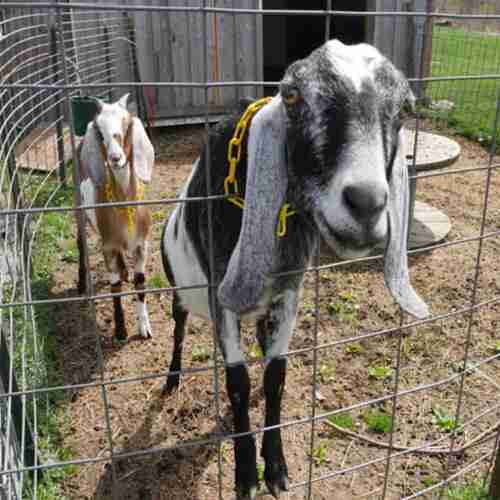
Permanent fences for livestock fencing typically require durable materials and construction methods to withstand the elements and the wear and tear from animals. Here are some common types of permanent livestock fencing:
Wooden Fencing: Consists of wooden posts spaced at regular intervals with horizontal rails attached between them. Uses split wooden rails, often without any wire mesh, providing a rustic look and typically used for larger livestock like cattle rather than containing smaller animals. Similar to post and rail, but with wooden boards instead of rails, providing a solid barrier.
Wire Fencing: Made of horizontal and vertical wires woven together, providing strength and containment for various livestock sizes. Tensioned wire fencing designed to be highly durable and resilient. It’s usually electrified to improve effectiveness in controlling livestock.
Consists of strands of wire twisted together with barbs spaced at intervals. It’s typically used for containing cattle but can cause injury to animals and should be used with caution.
Steel Pipe Fencing: Uses steel pipes instead of wooden posts. It’s very durable and often used in areas with high wind or where larger animals may push against the fence.
Vinyl Fencing: Provides a low-maintenance alternative to wood, with similar styles such as post and rail or board fencing. It’s durable and resistant to rot, weathering, and pests.
Electric Fencing: Uses wires that carry an electric current to deter livestock from pushing or leaning on the fence. It’s often used as an additional barrier or in conjunction with other types of fencing.
When installing permanent livestock fencing, it’s essential to consider factors such as the type and size of livestock, terrain, climate, and budget. Proper installation and maintenance are crucial to ensuring the longevity and effectiveness of the fence in containing and protecting livestock.
6.2 Temporary fences

Temporary fences for livestock fencing are essential for managing livestock movement, segregating pastures, and ensuring the safety of both the animals and the surrounding environment. Here are some common types of temporary fencing options for livestock:
Electric Fencing: This is one of the most popular choices for temporary livestock fencing. It consists of lightweight plastic or fiberglass posts with electrified wires strung between them. Electric fencing is effective in controlling various types of livestock, and it’s relatively easy to install and move.
Polywire or Polytape Fencing: Similar to electric fencing, polywire and polytape are made from lightweight materials and are easy to install and move. They provide a visible barrier for the animals and can be electrified for added security.
Temporary Netting: Temporary netting fences are made from durable materials like polyethylene and are designed to be easily moved and set up. They are particularly useful for containing small ruminants like sheep and goats.
Wire Mesh Panels: Wire mesh panels are another option for temporary livestock fencing. These panels are sturdy and can be connected together to create a secure enclosure. They are commonly used for creating temporary pens or holding areas for livestock.
Step-in Posts and Plastic Mesh: Step-in posts are lightweight and easy to install in the ground. When combined with plastic mesh fencing, they create a temporary barrier that can be quickly set up and taken down as needed.
Temporary Electric Netting: This type of fencing combines the benefits of electric fencing with the portability of netting. It’s effective for containing various types of livestock and can be easily moved to different locations.
Wire Panels with T-Posts: Welded wire panels can be attached to T-posts to create a temporary fencing solution. This type of fencing is more durable than some other options and provides a secure barrier for livestock.
8.1 How far apart should posts be for livestock fencing?

The spacing of posts for livestock fencing can vary depending on several factors including the type of livestock, the terrain, and the type of fencing being used. However, a general guideline is to space posts approximately 8 to 12 feet apart.
For areas with uneven terrain or where additional support is needed, closer spacing may be necessary. Additionally, if using electric fencing or high-tensile wire, posts may be spaced farther apart compared to traditional wooden or steel fencing.
8.2 Why is it called livestock fencing?
Livestock fencing is called so because it is specifically designed and used to contain and control livestock animals within a defined area.
The primary purpose of livestock fencing is to create boundaries or enclosures to keep livestock such as cattle, sheep, goats, horses, and others within a designated area, preventing them from wandering off, straying onto roads, or entering areas where they shouldn’t be.
Livestock fencing is typically constructed to withstand the size and strength of the animals it is meant to contain, and it often involves materials and construction methods tailored to the needs and behaviors of different types of livestock.
8.3 What fencing is best for livestock?
The best fencing for livestock depends on various factors such as the type of livestock, the terrain, budget, and personal preferences. Here are some common options:
Woven Wire Fencing: This type of fencing is versatile and durable, making it suitable for a wide range of livestock including cattle, sheep, goats, and horses. It provides good security and containment.
High Tensile Electric Fencing: High tensile wire fencing, when electrified, can be effective for containing livestock. It’s relatively inexpensive and easy to install, but may not be suitable for all types of animals, especially those that are not easily trained to respect electric fences.
Barbed Wire Fencing: Barbed wire fencing is commonly used for cattle and other large livestock. It’s relatively inexpensive and effective for containment, but may cause injury to animals if they get caught in it.
Electric Netting: Electric netting is useful for temporary or rotational grazing systems. It’s easy to move and set up, making it suitable for managing livestock in different areas of a pasture.
Wooden Fencing: Wooden fencing, such as post and rail or split rail, can provide a rustic and aesthetically pleasing containment option for livestock. It’s commonly used for horses and other large animals but can be expensive to install and maintain.
Mesh Fencing: Mesh fencing, such as chain link or welded wire, can be effective for smaller livestock like poultry or for creating secure enclosures within larger pastures.
Electric Tape or Rope Fencing: Electric tape or rope fencing can be a more visible alternative to traditional electric wire fencing. It’s often used for horses and can be easily moved or adjusted.