Comprehensive Chain Mesh Wall Introducing

Table of Contents

1. Top reasons to install chain mesh wall

Chain mesh walls offer several benefits, making them a popular choice for various applications. Here are some top reasons to install a chain mesh wall.

1.1 Security

Chain mesh walls provide a level of security by creating a barrier that deters unauthorized access to a property. They are sturdy and difficult to climb, making them effective for keeping intruders out.

Chain mesh walls create a strong physical barrier around a property, providing a clear demarcation of boundaries. They act as a deterrent to unauthorized entry, deterring intruders and preventing easy access.

1.2 Durability

Chain mesh walls are typically made from galvanized steel, which is resistant to corrosion and can withstand various weather conditions. This durability ensures a longer lifespan compared to some other fencing materials.

Chain mesh walls are constructed using galvanized or coated steel, making them highly durable and resistant to rust, corrosion, and weathering. This durability ensures a long lifespan, even in harsh environmental conditions.

1.3 Visibility

Chain mesh walls offer a level of transparency that allows for visibility through the fence. This can be advantageous for surveillance purposes, allowing property owners to monitor activities on both sides of the fence.

They are versatile and can be installed in various heights and configurations to meet specific security needs. Different gauges of wire and mesh sizes allow for customization according to the level of security required.

1.4 Cost-effective

Chain mesh walls are often more affordable than other types of fencing, making them a cost-effective option for securing a property. Installation costs are generally lower, and maintenance requirements are minimal.

Chain mesh walls are generally more cost-effective than many other fencing options, both in terms of initial installation costs and long-term maintenance expenses. Their durability ensures a good return on investment over time.

2. There are three ways in which chain mesh wall achieve weather resistance

Chain mesh walls are designed to provide security, delineation, and boundary demarcation. Weather resistance is an important aspect of their durability and longevity. Here are three ways chain mesh walls achieve weather resistance:

2.1 Galvanizing

Chain mesh walls are typically made from galvanized steel. Galvanization involves coating the steel with a protective layer of zinc to prevent corrosion. This process creates a barrier between the steel and the surrounding elements, such as moisture, rain, and air.

Galvanized chain link fences are highly resistant to rust and corrosion, making them suitable for various weather conditions.

2.2 Powder coating

Powder coating is a durable and protective finish applied as a free-flowing, dry powder. When applied to surfaces like metal, it creates a hard finish that is tougher and more resistant to weathering compared to conventional liquid paint.

To achieve weather resistance in a chain mesh wall through powder coating, several considerations should be taken into account:

Preparation of Surface: Proper surface preparation is crucial. The chain mesh wall needs to be thoroughly cleaned and free from any contaminants like dirt, oil, or rust. Sandblasting or chemical treatment might be necessary to ensure good adhesion of the powder coating.

Choice of Powder Coating: Select a powder coating specifically designed for outdoor or weather-resistant applications. There are various types of powder coatings available with different formulations catering to specific environmental conditions, such as UV exposure, humidity, or corrosive elements.

Primer Coat: Applying a suitable primer coat before the actual powder coating can enhance adhesion and further improve weather resistance. The primer acts as a foundation for the powder coating to adhere to and helps prevent corrosion.

Proper Application Technique: The powder coating should be applied evenly and with the right thickness. Following the manufacturer’s guidelines regarding application techniques, temperature, and curing times is essential for optimal performance and durability.

Curing Process: Curing the powder-coated surface involves heating it to the specified temperature to allow the powder particles to melt and form a continuous film. This step is critical as it determines the final hardness, durability, and weather resistance of the coating.

2.3 Vinyl Coating

Vinyl coating is a process wherein a layer of vinyl material is applied to a surface to enhance its properties, such as weather resistance, durability, and appearance.

When it comes to chain mesh walls (commonly known as chain-link fences), applying a vinyl coating can significantly improve their ability to withstand weather conditions and increase their longevity.

Chain mesh walls are typically made of metal, such as galvanized steel. While this material is durable, it can be prone to corrosion when exposed to moisture, rain, or other weather elements.

Applying a vinyl coating creates a protective barrier, reducing direct exposure to water and moisture, thus inhibiting rust and corrosion.

Vinyl coatings add an extra layer of protection to the chain mesh, making it more resistant to scratches, impacts, and wear caused by weather conditions like wind, rain, and temperature fluctuations. This helps the fence maintain its structural integrity over time.

When it comes to garden chain link fencing with a green color mesh, there are typically various options available for the edge type or the way the ends or edges of the fencing are finished. Here are a few common edge types for green color garden chain link fencing mesh.

3.1 Knuckle Edge
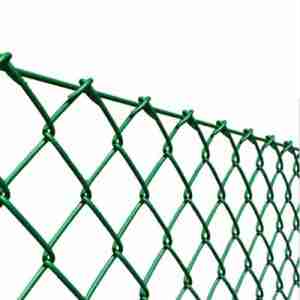
chain mesh wall

In chain link fencing, the knuckle edge typically refers to the edge of the wire mesh where the wire ends are bent to form a rounded or closed loop. This design helps to prevent sharp edges that could potentially cause injury or snag clothing.

The opposite of a knuckle edge is a barb edge, which features the wire ends twisted and pointed outward to create barbs.

The green color in the context of garden chain link fencing mesh refers to the coating or finish applied to the chain link fence. This coating is often a PVC (Polyvinyl Chloride) material that provides protection against corrosion, rust, and adds an aesthetic appeal by blending with the natural surroundings of a garden or outdoor space.

Combining the knuckle edge design with a green-colored PVC-coated chain link fence makes it a popular choice for gardens and residential areas due to its safety, durability, and aesthetic appearance.

The knuckle edge helps maintain safety by preventing sharp edges, while the green color coating enhances the fence’s visual appeal and ensures longevity by protecting against environmental elements.

3.2 Twist or Barb Edge
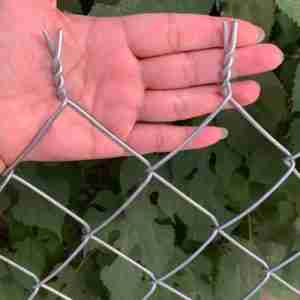
twist or barb edge of chain mesh wall

In this type, the wire ends are twisted together to form a pointed or barbed edge. This is more secure and adds a level of deterrence against intruders or animals attempting to climb over the fence.

Unique twist or barb edge style for a green-colored garden chain-link fencing mesh could involve incorporating nature-inspired elements or decorative motifs. Here are a few creative suggestions:

Leafy Vine Twist: Integrate a leafy vine design along the top edge of the fencing mesh. Mimic the appearance of climbing vines twisting around the links, with occasional leaves protruding at intervals, adding a natural and aesthetically pleasing touch.

Floral Barb Edge: Infuse the top edge with small, decorative floral patterns or shapes. These could be welded or attached intermittently along the fence line, creating a subtle yet charming garden-themed appearance.

Animal Silhouette Twist: Create a series of animal silhouettes (birds, butterflies, or other garden creatures) in a repetitive pattern along the top edge. This design could be laser-cut or welded onto the fencing, offering a playful and whimsical twist to the garden fencing.

Geometric Twist with Green Accents: Incorporate geometric shapes (triangles, squares, or diamonds) intermittently along the edge, painted or accented with a complementary shade of green. This adds a modern, stylish look while blending seamlessly into the garden environment.

3.3 Selvage Edge
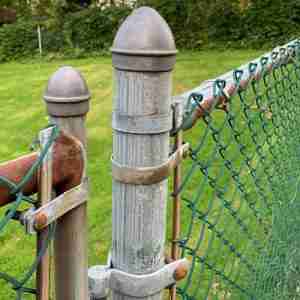
selvage edge of chain mesh wall

Selvage edge refers to the finished edge of the chain link fabric. The selvage can be knuckle, barb, or twisted, providing different levels of security and aesthetics to the fencing.

The selvage edge of a chain link fencing mesh refers to the finished edge of the fabric. For a green-colored garden chain link fencing mesh, the selvage edge typically comes in different types:

Knuckle or K-Selvage: This type of selvage is created by interlocking the wire ends at the top and bottom of the fabric. The interlocking resembles a knuckle, providing a smooth and rounded edge.

Twist or T-Selvage: In this type, the wire ends are twisted together to form a more secure and rigid edge. The twisted selvage offers additional strength and security to the fencing but may have protruding ends, making it less suitable for areas where safety is a concern.

For a green-colored garden chain link fencing mesh, either knuckle (K-selvage) or twist (T-selvage) selvage types might be available, depending on the manufacturer and specific product line.

3.4 Tension Wire Edge
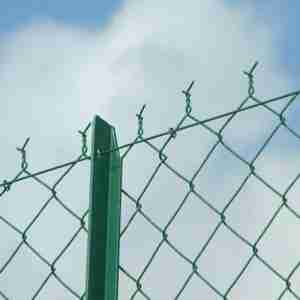
tension wire edge of chain mesh wall

The tension wire is an essential component used in chain-link fencing to add stability and strength to the fence structure. It’s often installed at the bottom and top of the fence fabric, running horizontally to prevent sagging and maintain the fence’s shape and rigidity.

When it comes to a green-colored garden chain-link fencing mesh, the tension wire serves to reinforce the fencing, ensuring it remains taut and secure.

The green color typically refers to the color of the chain-link fabric itself, which is often coated or treated to achieve a green finish, offering a more aesthetically pleasing look for garden or outdoor settings.

The tension wire is not colored but serves a crucial function in holding the chain-link fabric firmly in place, preventing it from loosening or sagging over time due to environmental factors or pressure.
4. How to install chain link fence on a stepped wall?

Installing chain link fence on a stepped wall requires careful planning and execution to ensure stability and proper alignment. Here are the general steps to install a chain link fence on a stepped wall.

4.1 Prepare the Wall

Clean the surface of the stepped wall where the fence will be installed. Ensure it’s free from debris, dirt, and any obstacles that might hinder the installation process.

4.2 Mark Post Positions

Determine the positions for the fence posts on the stepped wall. Use a measuring tape and mark where each post will be placed. Posts should be spaced according to your fence design and manufacturer’s recommendations.

4.3 Drill Holes

Use a masonry drill bit appropriate for the surface material of your wall (concrete, brick, etc.) to drill holes for the posts. The holes should be slightly larger in diameter than the posts to accommodate them.

4.4 Set Posts

Insert the fence posts into the holes you drilled. Make sure they’re plumb and level using a level. For stability, you might need to fill the holes with concrete mix around the posts. Follow the concrete mix instructions and allow time for it to set before proceeding.

4.5 Attach Fittings

Once the posts are securely in place, attach the necessary fittings, such as tension bands and brace bands, to the posts according to the manufacturer’s instructions.

4.6 Install Top Rail and Tension Wire

Slide the top rail through the loops or fittings on the top of the posts. Then, attach tension wire along the bottom of the fence fabric to maintain its stability and prevent sagging.

4.7 Hang Fence Fabric

Unroll the chain link fence fabric along the length of the fence line. Attach it to the posts using tension bars and tension bands. Make sure the fabric is taut and properly aligned.

4.8 Stretch and Secure

Use a fence stretcher to pull the fabric tight. Attach it securely to the end posts using tension bands. Repeat this process for the entire length of the fence, ensuring the fabric remains taut.

4.9 Finishing Touches

Make any necessary adjustments to ensure the fence is straight, level, and properly tensioned. Double-check all fittings and connections to ensure they are secure.

4.10 Safety Check

Once the fence is installed, inspect the entire structure to ensure there are no sharp edges or protrusions that could pose a safety hazard.

5. Green color garden chain link fencing specification

Surface

PVC Coating Or Galvanized

Length

15m-30m

Wire Gauge

1.6mm-5.0mm

Mesh Size

50*50mm, 60*60mm, 80*80mm

Hole Shape

Diamond Hole

Width

0.5m-3.0m

6. Applications of chain mesh wall

Chain mesh walls have numerous applications due to their versatility, durability, and cost-effectiveness. Here are some common applications.

6.1 Security Fencing

Chain mesh walls are widely used for security purposes in various settings such as residential areas, commercial properties, industrial facilities, and public spaces. They create a barrier that deters unauthorized access and helps in controlling the movement of people and vehicles.

Security fencing is a type of barrier designed primarily to enhance security and control access to a specific area. It’s commonly used in various settings such as residential properties, commercial sites, industrial facilities, government installations, prisons, and more.

It helps control who can enter or exit a particular space by incorporating gates, locks, or other access control mechanisms.

6.2 Sports Facilities

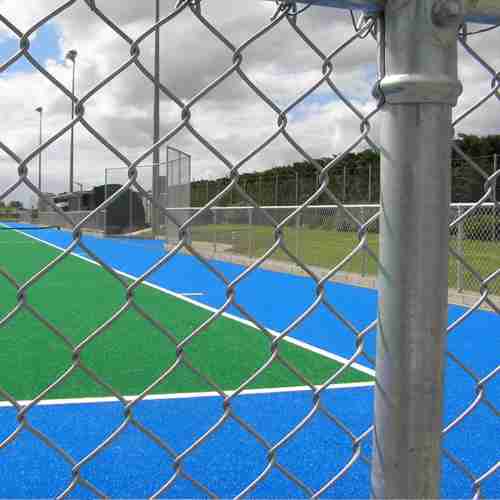
Chain mesh walls are commonly seen around sports fields, tennis courts, baseball fields, and other recreational areas. They provide a boundary without obstructing visibility, allowing spectators to watch the game while ensuring safety.

Chain mesh walls are frequently used as perimeter fencing around sports fields, such as soccer fields, baseball diamonds, tennis courts, and others. They help define the boundaries of the playing area, prevent unauthorized access, and provide a barrier between spectators and players.

In sports like tennis or baseball, chain mesh fencing acts as a barrier to contain balls within the playing area, preventing them from causing disruption or potential hazards to surrounding areas.

For sports like baseball or softball, chain mesh walls are commonly used as backstops behind home plate to stop pitched or hit balls, preventing them from traveling beyond the field.

6.3 Animal Enclosures

Chain mesh is commonly used in various animal enclosures due to its versatility, durability, and cost-effectiveness.

Chain mesh walls are often utilized in zoos and wildlife parks to create enclosures for various animals. These enclosures can range from smaller areas for birds and small mammals to larger spaces for big cats or primates.

Bird aviaries often use chain mesh walls because they provide a secure barrier for birds while allowing adequate ventilation and natural light. Chain mesh can also be used for enclosures housing reptiles or small animals, with appropriate mesh sizes to prevent escape.

6.4 Perimeter Fencing

Chain mesh walls are used to establish boundaries around properties, construction sites, schools, and government facilities. Chain mesh walls help in demarcating areas and preventing unauthorized entry.

6.5 Temporary Barriers

Chain mesh walls are versatile barriers used in various applications due to their durability, cost-effectiveness, and easy installation.

Chain mesh walls are frequently employed in construction sites to secure the area, preventing unauthorized access and enhancing safety by keeping the public away from potentially hazardous areas.

These fences are often used as temporary barriers in events, concerts, festivals, or sports events to manage crowds, designate specific areas, and ensure orderly movement.

They can serve as temporary security perimeters for temporary facilities, parking lots, or outdoor storage areas, providing a clear boundary and a deterrent against trespassing or theft.

6.6 Privacy Screening

In some cases, chain mesh walls are used in combination with privacy slats or screening materials to provide a certain level of privacy while maintaining airflow and visibility.

Chain mesh walls are commonly used for various purposes, including privacy screening.

Privacy slats are plastic or metal inserts that can be woven into the chain mesh to enhance privacy. They come in various colors and styles, offering partial to full privacy based on the selected design.

Installing windscreen panels made of mesh fabric over the chain link fence can help provide privacy while allowing airflow. These screens are available in different opacities to suit varying privacy needs.

Planting vines, shrubs, or climbing plants near the fence can create a natural barrier for privacy. As the plants grow and cover the chain mesh, they enhance privacy and aesthetics.

6.7 Gardens and Landscaping

Chain mesh walls are versatile and popular choices for various landscaping and garden applications.

Chain mesh walls are frequently used as perimeter fences for gardens and landscapes. They offer a transparent boundary that demarcates property lines while providing security and deterring unauthorized entry.

These fences are great for safeguarding areas such as pool enclosures, protecting flower beds or vegetable gardens from animals, or creating safe play areas for children and pets.

They can serve as a sturdy support structure for climbing plants like ivy, roses, or vine vegetables. As the plants grow, they cover the mesh, creating a green wall that adds privacy and aesthetic appeal.

7. Conclusion

Chain mesh walls offer several advantages in various applications. However, the conclusion about their effectiveness or suitability depends on specific needs and contexts.

Chain mesh walls provide a visible barrier that delineates property lines and can deter unauthorized entry. However, they might not be the most secure option for high-security areas as they can be climbed over or cut through relatively easily compared to solid walls.

Chain mesh walls tend to be cost-effective compared to many other types of fencing. They are often less expensive to install initially and require minimal maintenance, making them a popular choice for various budgets.

In conclusion, chain mesh walls/fences offer a balance between cost-effectiveness, durability, and versatility. They are suitable for many applications where security is a concern but might not be ideal for scenarios requiring maximum privacy or high-security needs.

Their effectiveness largely depends on the specific requirements and priorities of the situation where they are used.

chain mesh fencing
Chain Mesh Fencing
Contact Form

Leave a Comment

Your email address will not be published. Required fields are marked *

Say Hello!

Get In Touch With Us

Office Address

Hanwang Road, Anping county, Hebei provine, China