
Table of Contents
1.What is welded mesh security fencing?
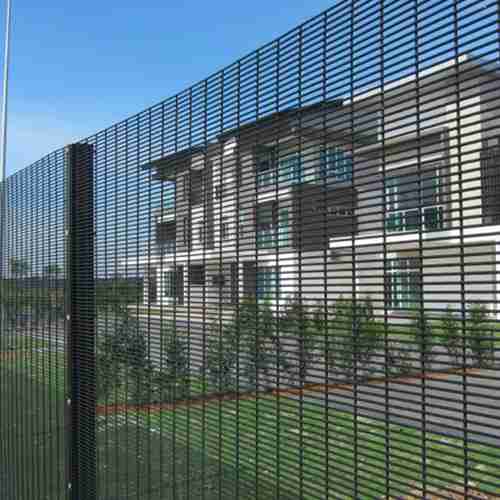
Welded mesh security fencing is a type of fencing system constructed using welded wire mesh panels. It is specifically designed to enhance security and provide barriers for various purposes, such as protecting property, securing perimeters, or controlling access to certain areas.
This type of fencing is made by welding together individual wires at their intersections, creating a durable and strong mesh pattern. The wires are typically made of steel, which contributes to the fence’s robustness and resistance to cutting or tampering.
The welded mesh panels are then usually attached to steel posts and secured in place with various methods, such as clamps, bolts, or clips.
Welded mesh security fencing comes in various heights, mesh sizes, and gauges to suit different security requirements. It offers visibility through the mesh, making it suitable for areas where surveillance or monitoring is necessary while still maintaining a level of security.
Additionally, this type of fencing is often coated with materials like galvanized steel or PVC to enhance its durability and resistance to corrosion, ensuring a longer lifespan, especially in outdoor environments.
2.How long does welded mesh security fencing last?
The lifespan of welded mesh security fencing can vary based on several factors, including the quality of materials used, environmental conditions, maintenance, and the level of wear and tear it experiences.
Generally, well-maintained welded mesh security fencing made from high-quality materials like galvanized steel or coated with corrosion-resistant materials can last for several years, often ranging from 10 to 20 years or more.
Regular maintenance, such as cleaning to remove debris or rust and addressing any damages promptly, can significantly extend its lifespan.
However, harsh environmental conditions like extreme weather, exposure to corrosive substances, or physical damage from accidents or deliberate tampering can shorten the lifespan of the fencing.
Installing welded mesh security fencing requires careful planning and execution to ensure its effectiveness. Here’s a general guide on how to install welded mesh security fencing.
3.1 Plan and Prepare
Measure the area and determine the number of panels and posts required. Plan the layout of the fence, including gate positions if needed. Check local regulations and obtain any necessary permits or permissions.
3.2 Prepare the Ground
Mark the positions for the fence posts using stakes or markers. Ensure the lines are straight and corners are square. Dig holes for the fence posts using a post hole digger or auger.
The depth and diameter of the holes should be appropriate for the fence type and local conditions. Place some gravel or crushed stone in the bottom of each hole for drainage.
3.3 Install the Fence Posts
Insert the fence posts into the holes, ensuring they are upright and aligned properly. Use a spirit level to check for vertical alignment. Fill the holes around the posts with concrete mix or postcrete and allow it to set according to the manufacturer’s instructions.
3.4 Attach Brackets and Panels
Once the posts are set, attach brackets to the posts if needed for panel installation.
Place the welded mesh panels between the posts and secure them using appropriate screws or bolts through the brackets. Ensure the panels are level and properly aligned.
3.5 Secure the Panels
Use additional fixings or clamps if necessary to ensure the panels are firmly secured to the posts and each other.
3.6 Install Gates (if applicable)
Install gate posts following similar steps used for regular posts. Hang the gate according to the manufacturer’s instructions, ensuring it swings freely and locks securely.
3.7 Finishing Touches
Trim any excess mesh if needed and check all connections for security. Add any additional features like barbed wire or anti-climb devices if required.
3.8 Clean Up and Maintenance
Remove any debris and ensure the area around the fence is clean. Regularly inspect the fence for damage or signs of wear, and perform maintenance as needed to ensure its security and longevity.
4.The coating of welded mesh security fencing
The coating applied to welded mesh security fencing serves several purposes, primarily aimed at enhancing its durability, longevity, and overall performance. There are various coating options available, each offering specific advantages:
4.1 Galvanized Coating
This is one of the most common coatings used for welded mesh fencing. It involves applying a layer of zinc to the steel to protect it from rust and corrosion. Galvanized fencing is durable and suitable for outdoor use, making it an excellent choice for security purposes.
Galvanization is a common method used to protect steel and iron from corrosion. This process involves applying a protective zinc coating to the metal surface, creating a barrier that prevents corrosive elements from reaching the underlying steel.
Galvanized coatings are widely used in various applications, including welded mesh security fencing.
Before galvanization, the welded mesh should undergo a thorough cleaning process to remove any contaminants such as dirt, grease, or rust. This ensures proper adhesion of the zinc coating.
The cleaned mesh is immersed in a bath of molten zinc. The zinc reacts with the steel to form a series of zinc-iron alloy layers (galvanized coating) on the surface. After galvanizing, the mesh is cooled and inspected to ensure that the coating is uniform and adheres well to the steel surface.
4.2 Powder Coating
This involves spraying a dry powder onto the mesh and then baking it to create a hard, durable finish. Powder coating provides excellent resistance to corrosion, scratches, and fading. It also offers a wide range of color options, allowing customization to blend with the environment or for identification purposes.
Powder coating is a popular finishing method for welded mesh security fencing because it provides a durable and attractive protective layer.
Ensure that the welded mesh is clean and free from any contaminants such as dirt, grease, or rust. Cleaning can be done through methods like sandblasting or chemical cleaning.
Some surfaces may require pre-treatment to improve adhesion. This can involve the application of a primer or a conversion coating to enhance the bond between the metal surface and the powder coating.
If there are areas of the welded mesh that should not be coated, such as certain joints or specific components, these areas need to be masked off before the powder coating process.
After the powder is applied, the coated welded mesh is moved to a curing oven. The high temperature in the oven melts the powder and allows it to flow and form a smooth, even coating on the mesh.
The curing process also chemically cross-links the powder particles, creating a strong and durable finish. The coated welded mesh is inspected for uniformity, adhesion, and overall quality. Any defects or imperfections may be addressed through rework or touch-up.
After curing, the coated welded mesh is allowed to cool before being packaged for shipment. Care should be taken during handling to avoid damaging the newly applied coating.
4.3 PVC Coating
Polyvinyl chloride (PVC) coating involves applying a layer of PVC over the welded mesh. This coating provides additional protection against corrosion and rust while also offering a variety of colors for aesthetic appeal. PVC coatings can also make the fencing more resistant to harsh weather conditions.
PVC coating of welded mesh security fencing is a process that involves applying a layer of polyvinyl chloride (PVC) to the surface of the welded wire mesh. This coating provides several benefits to the security fencing, making it more durable and resistant to various environmental conditions.
4.4 Polyester Coating
Similar to PVC coating, polyester coatings offer protection against corrosion and abrasion. They are durable and provide good color retention, making them suitable for outdoor applications.
Polyester coating is a popular method for finishing welded mesh security fencing to enhance its durability, corrosion resistance, and aesthetic appeal. The coating process involves applying a layer of polyester powder onto the surface of the welded mesh and then curing it to form a solid, protective finish.
Before applying the polyester coating, it’s crucial to prepare the surface of the welded mesh. This typically involves cleaning the mesh to remove any contaminants, rust, or scale.
Surface preparation may also include a pre-treatment process such as phosphating or chromating to improve the adhesion of the coating. The polyester powder is applied to the prepared mesh surface through an electrostatic spray gun or fluidized bed.
The electrostatic method is more common and involves charging the powder particles, which are then attracted to the grounded mesh. This ensures an even and consistent coating.
After the polyester powder is applied, the mesh is transferred to an oven for curing. Curing involves exposing the coated mesh to high temperatures (typically between 160°C to 200°C or 320°F to 392°F) for a specified duration.
The heat causes the powder to melt, flow, and then react to form a continuous, protective film over the mesh.
Once the curing process is complete, the coated mesh is allowed to cool gradually. Cooling is essential to ensure that the polyester coating hardens properly.
After cooling, a quality check is performed to ensure that the coating is uniform, adheres well to the mesh, and meets the desired thickness and appearance.
5. Types of welded mesh security fencing
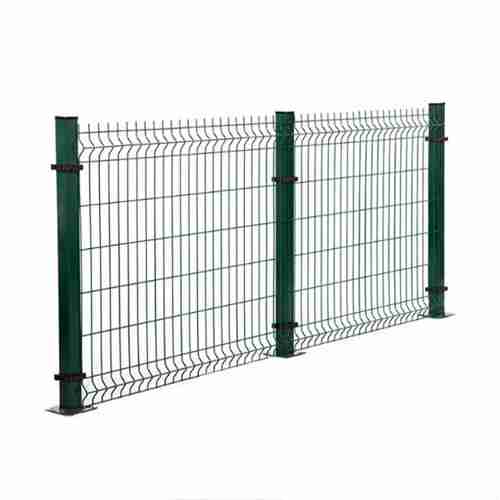
Welded mesh security fencing comes in various types, each designed to meet specific security and fencing requirements. The choice of a particular type depends on factors such as the level of security needed, the environment, and the intended use.
Here are some common types of welded mesh security fencing.
5.1 Curved Welded Mesh Security Fencing
Curved welded mesh security fencing is a type of fencing system designed to provide high-security measures while incorporating a curved or angled structure. This fencing is typically made from welded wire mesh panels, which are joined together by welding the intersecting wires.
The curved or angled design makes it difficult for intruders to climb over the fence, adding an extra layer of security compared to traditional straight-line fences. The curved design can also enhance the overall appearance of the fencing, making it more visually appealing compared to standard straight fences.
Welded mesh fencing tends to be durable and sturdy, providing long-lasting security. The welding process ensures that the wires are firmly joined together, making it difficult to break or dismantle the fence easily.
5.2 Welded Wire Mesh Panels
Welded wire mesh panels are prefabricated sheets or rolls of interconnected metal wires that are welded together at their intersections. These panels are commonly used in construction, industrial, agricultural, and residential applications for various purposes.
The welding process ensures the durability and strength of the mesh, making it suitable for a wide range of applications.
5.3 358 Mesh Fencing
358 mesh fencing type features a mesh configuration with narrow apertures (usually 3″ x 0.5″) that prevent footholds for climbing. It’s commonly used in high-security areas like prisons, airports, and military installations.
The mesh configuration of 358 fencing is characterized by small rectangular apertures, making it difficult for intruders to climb or cut through the fence.
The tight mesh pattern provides high levels of visibility, making it suitable for areas where surveillance is important.
5.4 Mesh Panel Fencing
These fences are constructed using welded wire mesh panels, offering a range of sizes and wire gauges. They provide a secure barrier and are often used in commercial and industrial settings.
The panels are typically constructed by welding vertical and horizontal wires together at their intersection points. The welding process creates a strong and rigid structure, enhancing the overall stability and security of the fence.
5.5 Palisade Fencing
While not entirely welded mesh, palisade fencing features vertical steel pales attached to horizontal rails. This design deters climbing and provides a formidable barrier, commonly used in industrial and high-security areas.
Palisade fencing is a type of security barrier that consists of vertical steel or aluminum pale (pointed or rounded) attached to horizontal rails. The pales are typically spaced apart to allow visibility through the fence while still providing a deterrent against climbing or intrusion.
Welded palisade fencing refers to a specific construction method where the individual components of the fence are welded together.
5.6 Multi-Layered Fencing Systems
Welded Multi-Layered Fencing Systems refer to fencing structures that are constructed using multiple layers of welded materials. These systems are designed to provide enhanced security, durability, and aesthetic appeal.
The layers are typically made of metal, and the welding process ensures a strong and seamless connection between the components.
The welded construction of the layers creates a robust and secure barrier, making it difficult for intruders to breach the fence. The seamless joints eliminate weak points that can be exploited for unauthorized access.
5.7 High-Security Perimeter Fencing
Utilizing heavy-duty welded mesh panels with additional features like anti-cut, anti-climb, or anti-ram properties, this fencing is employed in critical infrastructure, military compounds, and government installations.
Welded high-security fencing is typically made from steel, providing strength and durability. The steel components are welded together to create a solid and secure barrier.
The panels of the fence are welded at the joints, making the structure more rigid and difficult to tamper with. This construction technique enhances the overall strength and security of the fencing.
The height of the fence is an important factor in determining its effectiveness. High-security fencing is often taller than standard fencing to deter climbing or scaling attempts.
5.8 Temporary Mesh Fencing
The mesh is created by welding the intersections of horizontal and vertical wires. This welding process ensures a strong and stable structure. The thickness of the wires used in the mesh can vary, influencing the strength and durability of the fencing.
Welded temporary mesh fencing is often made from steel, providing strength and resistance to external forces. The steel can be coated or galvanized to enhance corrosion resistance.
6.Specification of curved welded wire mesh
Material | low carbon steel wire or galvanized wire. |
Color | green, blue, white, gray or customized according to RAL colors |
Wire diameter | 3–8 mm |
Mesh size | 50 × 100 mm, 50 × 150 mm, 50 × 200 mm, 75 × 150 mm, 75 × 200 mm |
Panel height | 0.63–2.43 m (standard) or customized |
Panel length | 2–3 m or customized |
Curve quantity | 2, 3 or 4 |
Post type | peach post, square post, rectangular post and round post |
Production process | Low carbon steel → Welded → Electrostatic spraying. Galvanized wire → Welded → Electrostatic spraying. Low carbon steel → Welded → Hot dipped galvanized. |
7.Features of welded mesh wire fence
Welded mesh wire fences are popular for their durability, strength, and versatility. They are used in various applications, including residential, commercial, industrial, and agricultural settings. Some key features of welded mesh wire fences include.
8. Conclusion
Welded mesh security fencing has become a popular choice for various applications, including residential, commercial, industrial, and public spaces.
Welded mesh security fencing is known for its durability and strength. The welded connections between vertical and horizontal wires create a robust structure that can withstand external forces and resist tampering or cutting attempts.
The design of welded mesh fencing provides a high level of security. The small mesh size makes it difficult for intruders to climb or cut through the fence. This feature acts as a deterrent and enhances the overall security of the enclosed area.
In conclusion, Welded mesh fencing allows for good visibility through the fence, maintaining a balance between security and aesthetics. This can be important for applications where both security and visual appeal are priorities, such as residential neighborhoods, parks, and public spaces.
