
Commercial security fencing serves various purposes, including security, privacy, aesthetics, and demarcation of property boundaries. Different types of commercial security fencing are available, each with its own advantages in terms of materials used, durability, security, and appearance. Here are some common types.
4.1 Commercial Chain Link Security Fencing
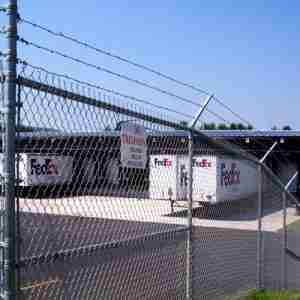
Commercial chain link security fencing is a type of fencing made from interwoven steel wires forming a diamond pattern. It’s commonly used in commercial and industrial settings for security, perimeter demarcation, and containment purposes.
Typically made from galvanized steel wire, which offers corrosion resistance and durability. It can also be coated with vinyl or polyester to enhance its appearance and provide additional protection against weathering.
Available in various heights and wire gauges to suit different security and containment needs. The gauge refers to the thickness of the wire used in the fencing, with lower gauge numbers indicating thicker and stronger wire.
4.2 Commercial Aluminum Ornamental Security Fences
Commercial aluminum ornamental security fences are durable, decorative fencing options commonly used in various commercial settings. These fences offer a blend of functionality, aesthetics, and low maintenance, making them popular choices for many businesses, institutions, and public spaces.
Aluminum is known for its strength and resistance to rust and corrosion, making it suitable for various weather conditions. These fences are long-lasting and require minimal maintenance compared to other materials like iron or steel.
They come in a variety of styles, designs, and colors, providing an elegant and decorative appearance that enhances the curb appeal of commercial properties. Common styles include traditional picket, ornate designs, and contemporary looks.
4.3 Commercial Wood Security Fences
Commercial wood security fences are sturdy and aesthetically pleasing barriers used in various commercial settings. These fences are typically constructed using high-quality wood such as cedar, redwood, or pressure-treated pine due to their durability and resistance to rot, insects, and weathering.
Commercial wood security fences serve multiple purposes, including security, privacy, defining boundaries, noise reduction, and enhancing the property’s appearance.
They come in various designs and styles, such as picket fences, privacy fences, split rail fences, board-on-board fences, and more. The design choice depends on the specific needs of the commercial property.
Before installation, it’s crucial to check local regulations, zoning laws, and obtain necessary permits, as some areas have specific rules regarding fence height, design, and placement.
4.4 Commercial Pool Security Fences
Commercial pool security fences are essential safety installations designed to secure and restrict access to pools in commercial settings such as hotels, resorts, community centers, schools, and public facilities.
The primary purpose of commercial pool security fences is to prevent unauthorized access to the pool area, particularly by children or individuals who might be at risk of accidental drowning. They act as a physical barrier, reducing the chances of accidents.
Commercial pool fences typically come in different materials, such as aluminum, wrought iron, vinyl, or glass, each with its own set of advantages in terms of durability, maintenance, and aesthetics.
4.5 Commercial Vinyl Security Fencing
Commercial vinyl security fencing is a type of fencing made primarily from PVC (polyvinyl chloride) material, offering durability, low maintenance, and a sleek appearance suitable for various commercial applications.
Vinyl fencing is highly durable and resistant to rotting, rust, fading, and pests. It can withstand harsh weather conditions like extreme heat or cold, making it a long-lasting fencing option.
Unlike wood or metal fencing, vinyl fencing requires minimal maintenance. It doesn’t need to be repainted, stained, or sealed. Periodic cleaning with soap and water is usually enough to maintain its appearance.
Commercial vinyl fencing comes in various styles, colors, and textures, offering flexibility in design. It can mimic the appearance of wood, stone, or metal, providing options that suit different architectural preferences.
4.6 Composite Commercial Security Fencing
Composite commercial security fencing refers to fencing systems made from a combination of materials, typically a blend of wood fibers and plastic. These materials are combined to create a durable, low-maintenance, and long-lasting fencing solution suitable for commercial properties.
The composite material often mimics the look of wood but offers advantages such as increased durability, resistance to rot, decay, and insect damage, as well as requiring minimal upkeep compared to traditional wood fencing.
Composite materials are designed to withstand harsh weather conditions, UV rays, and moisture, ensuring the fence maintains its structural integrity over time.
Unlike wood, composite fencing generally doesn’t require staining, painting, or sealing. Cleaning usually involves simple tasks like hosing it down or using mild soap and water.
4.7 Commercial Farm Security Fencing
Commercial farm security fencing serves various purposes, from delineating boundaries and protecting crops to managing livestock and safeguarding assets. When considering commercial farm fencing, several factors should be taken into account, including the type of farm, the terrain, the livestock or crops being protected, and the budget.
This type of fencing consists of horizontal wires woven together at vertical intervals. It’s commonly used for cattle, horses, and other large livestock. It’s durable and provides good containment.
Made from twisted strands of wire with sharp barbs spaced along it, barbed wire fencing is often used for containing cattle and keeping predators out. It’s relatively inexpensive but can cause injury to animals and should be installed with caution.
4.8 Commercial Dog Kennel Security Fencing
Choosing the right security fencing for a commercial dog kennel involves considering various factors such as safety, durability, ease of maintenance, and containment capabilities.
Chain-link fencing is a popular choice for dog kennels due to its affordability, durability, and visibility. It provides adequate containment and allows dogs to see their surroundings. Ensure that the gauge of the chain-link is appropriate for the size and strength of the dogs.
Welded wire panels or fencing are made by welding the intersections of vertical and horizontal wires. They offer good visibility and durability, making them suitable for containing dogs of various sizes. The gauge and spacing of wires should be chosen based on the type and size of dogs.
4.9 Commercial Solid Tongue and Groove
Commercial solid tongue and groove typically refers to a type of flooring or wall paneling that uses interlocking edges. The tongue-and-groove system involves fitting the tongue of one plank or panel into the groove of another, creating a seamless and sturdy connection.
Commercial-grade tongue-and-groove materials are often used in various settings such as businesses, offices, retail spaces, and other commercial environments due to their durability, aesthetic appeal, and ease of installation.
These materials can be made from different types of wood, engineered wood products, or synthetic materials like PVC or vinyl, offering a range of options in terms of appearance, strength, and maintenance requirements.
Solid tongue-and-groove products are popular for flooring, wall paneling, and sometimes even ceilings, providing a professional and elegant finish while offering resilience against wear and tear in high-traffic commercial areas.
4.10 Commercial Barbed Wire Security Fence
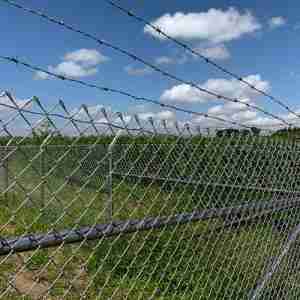
Commercial barbed wire security fence is a type of fencing system primarily used for security and containment purposes in commercial and industrial settings. It consists of strands of wire twisted together with sharp barbs spaced at intervals along the wires.
The design of the barbs is intended to deter and prevent unauthorized entry or exit from a designated area. Typically made from high-tensile steel wire, which offers strength and durability to withstand external forces and attempts to breach the fence.
These are sharp, pointed metal pieces attached at regular intervals along the wires. The barbs serve as a deterrent to prevent climbing or scaling the fence and act as a security measure against unauthorized access.
Commercial barbed wire fences come in various designs and configurations, including single-strand, double-strand, or multiple-strand configurations. The number of wire strands and the spacing between them can vary based on security needs.
Proper installation is crucial for the effectiveness of the fence. It often involves setting up sturdy posts or supports at regular intervals along the perimeter and stretching the wires tightly between them.
Commercial aluminum security fences are popular choices for businesses and commercial properties due to their durability, low maintenance requirements, and aesthetic appeal.
There are various designs and styles available to suit different needs and preferences. Here are some common commercial aluminum fence designs.
7.1 Classic Spear Top
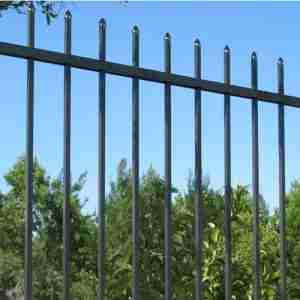
A classic spear top design for a commercial aluminum security fence refers to a specific style of fencing that features ornamental spear-shaped pickets or finials at the top of each vertical bar.
This design is often chosen for its aesthetic appeal and ability to enhance the overall look of a property while providing security and durability.
The spear top design typically involves pointed or spear-shaped finials at the top of each vertical picket. This design adds a decorative touch to the fence while also serving as a deterrent for climbing.
7.2 Flat Top With Spear
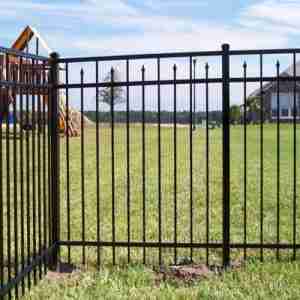
Flat top design typically means that the uppermost part of the fence is straight and level, creating a clean and modern look. This design is common in contemporary and commercial settings.
The term “spear” often refers to decorative finials or points at the top of each picket or vertical bar in the fence. These spear-like elements can add an ornamental touch to the fence, enhancing its aesthetic appeal. They may vary in design, such as traditional arrow-like points or more intricate spear shapes.
When combined, a flat top with spear design creates a fence that is not only functional but also visually appealing.
7.3 Flat Top, Standard Bottom Rail
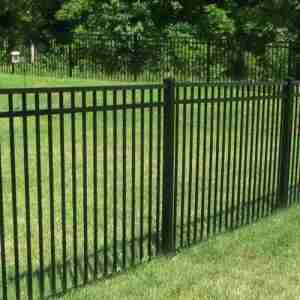
Flat top design means the panel does not have any ornamental protrusions or decorative elements. Instead, it features a straight, horizontal line across the top. This design is often chosen for its clean and contemporary appearance.
The bottom rail is a horizontal bar at the bottom of the fence panel that helps to provide stability and support to the overall structure. The term “standard” suggests that this rail has a conventional or typical design, without any distinctive decorative features.
7.4 Flat Top Double Pickets
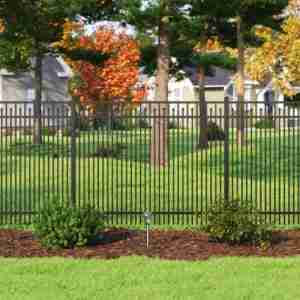
This indicates that the upper edge of the pickets (the vertical fence boards) is flat rather than having a decorative or pointed design. A flat top fence usually provides a clean and modern appearance.
This suggests that there are two horizontal layers or rows of pickets in the fence design. This could be achieved by having two parallel rows of pickets with a space in between or by overlapping two layers for added thickness and visual interest.
7.5 Spear Top Double Pickets
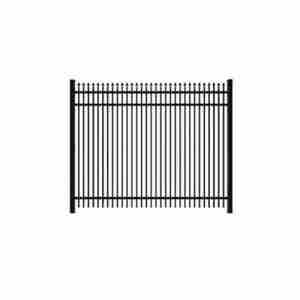
This refers to the shape of the pickets or posts at the top of the commercial security fence. The term “spear top” typically indicates that the pickets have a pointed or spear-like design at the upper end.
Double pickets can enhance the security and privacy of the fence, as well as contribute to its visual appeal. The spacing and arrangement of the pickets may vary depending on the specific design and purpose of the fence.
7.6 Flat Top, Flush Bottom Rail
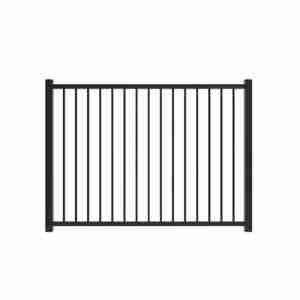
A flat top design means that the uppermost horizontal rail of the aluminum security fence panels is straight and level across its length. It creates a clean and simple look without any decorative spikes or protruding elements at the top of the fence.
Flat top designs are often chosen for their modern and sleek appearance. They are commonly used in commercial settings where a more contemporary or minimalist aesthetic is desired.
7.7 Flush Bottom Rail
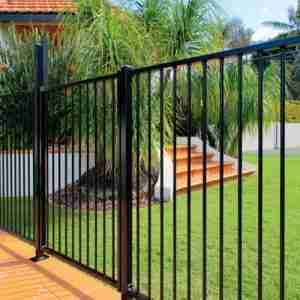
The term “flush bottom rail” indicates that the lower horizontal rail of the aluminum security fence panels is positioned in a way that it aligns or is nearly level with the bottom of the vertical pickets or posts.
This design feature contributes to a smooth and seamless appearance at the bottom of the fence. It helps prevent any protruding elements that could catch on objects or pose a tripping hazard.
The flush bottom rail is often preferred for both aesthetic reasons and practical considerations, especially in commercial applications where safety and a polished appearance are important.
7.8 2-Rail Flat Top
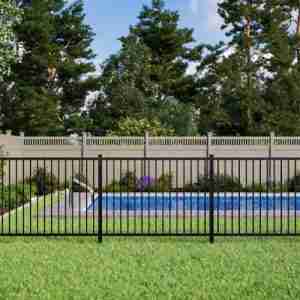
This indicates the number of horizontal rails or bars that run horizontally across the security fence panel. In a 2-rail fence, there are two of these horizontal bars. Rails provide structural support to the fence and contribute to its overall stability.
The term “flat top” describes the design of the upper part of the fence where the vertical pickets or posts meet the horizontal rails. In a flat top design, the upper edge of the fence forms a straight, level line without any decorative curves or spikes.
