
Table of Contents
1. The primary purpose of the agricultural barrier

The primary purpose of an agricultural barrier is to provide a physical barrier or enclosure around a specific area of land to manage, protect, or control livestock, crops, or property within that defined space.
Barriers are used to keep livestock, such as cows, horses, sheep, or goats, confined to a particular pasture or grazing area, preventing them from wandering off or getting into unwanted areas.
Barriers protect crops, gardens, or orchards from animals that might damage or eat them, such as deer, rabbits, or other wildlife. They can also serve as a security measure to prevent theft or unauthorized access to agricultural property and equipment.
Barriers demarcate property lines or boundaries between different landowners or agricultural areas.
2. The expected lifespan of the agricultural barrier material
The expected lifespan of agricultural barrier materials can vary significantly depending on the type of material used, environmental conditions, maintenance, and other factors. Here are some common agricultural barrier materials and their approximate lifespans under typical conditions.
2.1 Wood
Treated wood (such as pressure-treated pine or cedar) can last anywhere from 10 to 30 years, depending on the level of treatment and environmental exposure. Regular maintenance, such as staining or painting, can prolong its life.
Vinyl or PVC barriers are known for their durability and can last 20 to 30 years or more with minimal maintenance. They are resistant to rot, decay, and insects, making them a long-lasting option.
Steel barriers, when properly coated with protective finishes, can last for several decades, often 20 to 50 years. Aluminum fences are also durable and can have a lifespan of 20 to 30 years or more.
Wire mesh barriers made of galvanized steel can last 20 to 40 years or more, depending on the gauge and quality of the wire. Rust-resistant coatings can extend their lifespan.
Barbed wire barriers typically have a lifespan of 20 to 30 years. The durability can vary based on the gauge of wire, quality, and exposure to elements.
Agricultural barriers serve various purposes, including keeping livestock secure, delineating property boundaries, and protecting crops from wildlife. Several types of agricultural fences are commonly used based on the specific needs of a farm or agricultural area:
Comprised of strands of wire with sharp barbs spaced at intervals, barbed wire barriers are economical and commonly used for containing cattle and other livestock.
Barbed wire barrier is a widely used agricultural barrier due to its affordability, simplicity, and effectiveness in containing livestock and demarcating property boundaries.
Barbed wire barrier consists of strands of wire stretched between wooden or metal posts. The wire has sharp barbs spaced at intervals along its length. The number of wire strands and the spacing of the barbs can vary depending on the intended purpose of the fence and the type of livestock being contained.
Constructed with wire woven together in a grid pattern, woven wire barrier comes in various heights and configurations suitable for different livestock sizes. They’re often used for sheep, goats, and other small animals.
Woven wire fencing is a popular choice for agricultural barriers due to its durability, versatility, and effectiveness in containing livestock and delineating property boundaries. This type of fencing is constructed by weaving horizontal and vertical wires together at intersecting points, forming a tight grid pattern.
Woven wire barrier is typically made from high-quality, galvanized steel wires, providing resistance against corrosion and ensuring longevity even in harsh weather conditions.
3.3 High-Tensile Wire Barrier
Made of high-strength wire that’s under high tension, high-tensile wire barrier are durable and require minimal maintenance. They’re commonly used for cattle, horses, and other large animals.
High-tensile wire fencing is a popular choice for agricultural barriers due to its strength, durability, and cost-effectiveness. It’s commonly used for containing livestock, securing boundaries, and protecting crops.
3.4 Wooden Fencing
Often made from treated wood, wooden fencing provide a rustic and sturdy barrier. Wooden fences are used for livestock, property delineation, or aesthetic purposes. Wooden fencing is commonly used in agriculture for various purposes, such as creating barriers, containing livestock, marking boundaries, and enhancing security.
Select durable and weather-resistant wood species like cedar, redwood, or treated pine. Treated wood is resistant to rot and decay, extending the lifespan of the fence.
Properly set sturdy wooden posts into the ground at regular intervals. This provides stability and ensures the fence can withstand environmental elements and potential animal pressure.
3.5 Vinyl Barrier
Vinyl barrier is known for its durability and can withstand harsh weather conditions, making it suitable for agricultural settings where it might be exposed to different elements.
Unlike wood barrier, vinyl doesn’t require painting or staining. It’s easy to clean and typically only needs occasional washing with soap and water to maintain its appearance.
Vinyl barrier are resistant to rotting, warping, and decay, which makes them last longer than traditional wood fences. This longevity can be a significant cost-saving factor over time.
3.6 Mesh Barrier
Mesh barrier includes various types such as chain-link fences, which are made of interlinked wires and are used in agricultural settings for containing smaller animals or securing specific areas.
Mesh fencing, such as woven wire or welded wire, is commonly used to create enclosures for livestock. It helps keep animals within a designated area and prevents them from wandering off.
3.7 Hedge Barrier
In some cases, living hedges or shrubs are used as natural fencing to demarcate boundaries or enclose livestock. They require maintenance but provide a more aesthetic and eco-friendly solution.
Hedge barrier involves using rows of shrubs or trees planted closely together to create a natural barrier. Historically, hedge fencing has been a traditional method of boundary demarcation and agricultural enclosure.
Hedge barrier provides a natural and aesthetically pleasing boundary. It can serve as a windbreak, reduce soil erosion, and act as a habitat for beneficial wildlife, promoting biodiversity on the farm.
Depending on the species of plants used and their density, hedge barrier can be effective in containing certain types of livestock. It may act as a deterrent, preventing animals from crossing or breaking through the barrier.
3.8 Split Rail Barrier
Made of timber logs or posts, split rail barriers are often used in rural or agricultural areas to mark boundaries, but they might not be suitable for containing animals.
Split rail barrier is a type of agricultural barrier or boundary typically constructed using split logs or timber. It’s a rustic and straightforward fencing style, commonly found in rural areas, farms, and ranches.
It is built using timber logs that are split lengthwise into rails. The logs are typically arranged horizontally in a zigzag pattern, creating a sturdy yet open fence.
4. What factors should be considered when choosing agricultural barrier type for livestock?
Choosing the right agricultural barrier type for livestock involves considering various factors to ensure the well-being and safety of the animals, as well as the efficiency of the farming operation. Here are key factors to consider.
4.1 Livestock Species and Size
Different livestock species have varying sizes and behaviors. Consider the specific needs and characteristics of the livestock you are managing. For example, a agricultural barrier suitable for cattle may not be appropriate for poultry.
When selecting an agricultural barrier type for livestock, several factors should be considered to ensure the safety, health, and containment of the animals.
Different species have varying behaviors, sizes, and capabilities. Consider the specific characteristics of the livestock you’re dealing with. For instance, fencing suitable for cattle might not be appropriate for smaller animals like sheep or goats.
The size of the animals matters when choosing barriers. Larger animals may require sturdier and taller fencing or barriers to prevent them from breaking through or jumping over.
4.2 Purpose of the Barrier
The purpose of using agricultural barrier in agricultural settings for livestock is to manage and control the movement of animals, to separate different areas or species, and to provide security and safety for both animals and humans.
Different animals have varying behavior and physical characteristics that influence the choice of barrier. For instance, a barrier suitable for cattle might not be effective for sheep or goats.
Consider the strength and durability required for the barrier based on the size and strength of the animals. Stronger barriers may be needed for larger or more aggressive livestock.
4.3 Material Durability and Strength
Choose materials that are durable and strong enough to withstand the pressure and activity of the livestock. The material should be able to resist wear, corrosion, and environmental conditions.
When selecting agricultural barriers for livestock, several factors related to material durability and strength should be considered. The chosen barriers must effectively contain the animals while ensuring durability against environmental conditions and the animals themselves.
4.4 Visibility
Livestock may benefit from agricultural barrier that allow them to see each other, as this can reduce stress and aggression. However, in some cases, solid barriers may be necessary for privacy or to prevent visual stimulation.
Selecting the appropriate agricultural barrier type for livestock involves considering various factors to ensure the safety, health, and effective management of the animals.
4.5 Maintenance Requirements
Consider the maintenance needs of the agricultural barrier. Some materials may require more frequent upkeep than others. Regular inspection and maintenance are crucial for the longevity and effectiveness of the barriers.
When choosing an agricultural barrier type for livestock, several factors need consideration to ensure it effectively contains the animals and meets the specific requirements of the farming operation.
Different types of livestock have varying behaviors and sizes. Consider whether the barrier is suitable for the specific animals you’re containing. For example, a fence suitable for cattle might not be appropriate for sheep or goats.
4.6 Cost
Evaluate the cost of materials, installation, and maintenance. Choose a agricultural barrier that fits within your budget while still meeting the necessary requirements for livestock management.
When selecting agricultural barriers for livestock, several factors should be considered to ensure the effectiveness, safety, and suitability of the barriers for the specific livestock and environment.
4.7 Environmental Impact
Consider the environmental impact of the agricultural barrier material. Some materials may be more sustainable and eco-friendly than others. Ensure that your choice aligns with sustainable farming practices.
When selecting agricultural barriers for livestock, several factors should be considered to minimize environmental impact and ensure the well-being of both the animals and the surrounding ecosystem.
4.8 Terrain and Landscape
Assess the topography and landscape of the area where the agricultural barriers will be installed. The terrain can affect the type of barrier needed, especially in areas with hills, water bodies, or uneven ground.
When choosing agricultural barriers for livestock, several factors need consideration to ensure the safety and efficiency of the farming operation. The type of terrain and landscape plays a crucial role in determining the most suitable barrier.
The natural features of the land, including slopes, valleys, rocks, and vegetation, impact the choice of barriers. For instance, steep slopes might require different types of barriers compared to flat terrain.
4.9 Regulatory Compliance
Be aware of local regulations and standards regarding agricultural barriers. Compliance with these regulations is essential to avoid legal issues and ensure the safety and well-being of the livestock.
When selecting an agricultural barrier type for livestock, several factors need consideration to ensure compliance with regulatory standards and effective management.
Understand and comply with local, state, and federal regulations governing livestock containment and agricultural practices. These regulations may specify certain types of barriers or materials that are permissible.
4.10 Predator Protection
If your livestock is susceptible to predators, choose agricultural barriers that offer protection against them. This may include features such as electric fencing or specific design elements that deter predators.
Identify the specific predators present in the area. Different types of predators may require different agricultural barrier types or deterrents. For instance, the measures needed to protect against large predators like wolves or bears might differ from those needed for smaller predators like foxes or raccoons.
The barrier should be strong and durable enough to withstand attempted breaches by predators. Factors such as the material used, construction quality, and sturdiness are crucial.
In some cases, transparent or less visible barriers might be preferred to avoid obstructing views or altering the landscape significantly. This can be important for aesthetic reasons or to maintain the animals’ visibility and comfort.
5. Some common signs of wear and tear in agricultural barrier
Agricultural barriers, such as fences and other structures used in farming, can experience wear and tear over time due to exposure to the elements, mechanical stress, and other factors. Here are some common signs of wear and tear in agricultural barriers:
5.1 Rust or Corrosion
Metal agricultural barrier, like fences or gates, may develop rust or corrosion over time, especially if they are exposed to moisture. This can weaken the structure and compromise its integrity.
Agricultural barriers, such as fences and other structures, are exposed to various environmental conditions that can lead to wear and tear over time. Rust and corrosion are common issues, especially in metal barriers.
The development of reddish-brown or orange spots on the surface of the barrier is a clear indication of rust. This discoloration often starts as small spots and can spread if not addressed.
As rust progresses, it can cause the paint or protective coating on the barrier to peel or flake off. This exposes the underlying metal to further corrosion.
Small bubbles forming under the paint or coating are another sign of corrosion. These bubbles are often filled with rust, indicating that the metal beneath is deteriorating.
5.2 Cracks or Breaks
Wooden agricultural barriers can develop cracks or breaks due to weathering, insect infestation, or physical stress. Check for any visible signs of damage along the length of the barrier.
Check for any visible cracks on the surface of the barrier. Cracks can weaken the structure and may lead to further damage if not addressed. Look for any obvious breaks or fractures in the barrier material.
5.3 Sagging or Leaning
A agricultural barrier that is sagging or leaning may indicate structural issues. This can be caused by unstable foundations, weakened supports, or damage to key components.
5.4 Wobbling or Unstable Structure
If fasteners are loose, the agricultural barrier may become wobbly or unstable. Gently shake or push the barrier to check for any unusual movement or lack of stability.
5.5 Fading or Peeling Paint
Painted agricultural barriers may show signs of fading or peeling. In addition to being an aesthetic issue, this can expose the material to the elements and accelerate wear and tear.
Fading or peeling paint on agricultural barriers can be signs of wear and tear, and they may indicate several underlying issues. Continuous exposure to sunlight can cause the paint on barriers to fade over time. UV rays can break down the pigments in the paint, leading to a loss of color intensity.
Harsh weather conditions, including rain, wind, and extreme temperatures, can contribute to the deterioration of paint. Moisture can seep into the barrier material, causing the paint to peel or crack.
The use of low-quality or inappropriate paint for outdoor applications can result in premature fading and peeling. Agricultural barriers are often exposed to various environmental factors, so using a high-quality, weather-resistant paint is crucial.
5.6 Visible Signs of Pests or Rot
Wooden agricultural barriers are susceptible to pests such as termites, which can cause structural damage. Look for signs of insect infestation or rot, such as holes, sawdust, or soft spots.
In agricultural settings, barriers are often used to protect crops or control the movement of pests. Signs of wear and tear in agricultural barriers can compromise their effectiveness. Additionally, visible signs of pests or rot may indicate the need for maintenance or replacement.
Tears, rips, or holes in the barrier material can provide entry points for pests.
Frayed edges or damaged seams may compromise the overall integrity of the barrier.
Fading or discoloration of the material may indicate prolonged exposure to sunlight, reducing the barrier’s durability.
5.7 Erosion Around the Base
Inspect the base of the agricultural barrier for signs of erosion, especially if the structure is installed on sloping terrain. Erosion can undermine the stability of the barrier.
6. How high does the agricultural fence need to be to effectively contain the livestock?
The height of an agricultural fence needed to contain livestock depends on several factors, including the type and size of the livestock, their jumping or climbing abilities, and the specific purpose of the fence. Here are some general guidelines for different types of livestock:
6.1 Cattle
For cattle, a common recommendation is a fence height of at least 4 to 5 feet. However, some cattle breeds are more adept at jumping or climbing, so a higher fence may be necessary in those cases. Additionally, the type of fencing material and construction can impact effectiveness.
6.2 Horses
Horses are known for their jumping abilities. A fence for horses is typically recommended to be at least 5 feet high, with some situations requiring even higher fences, especially if the horses are athletic or if the pasture conditions are lush and the horses are more prone to try to jump.
6.3 Sheep and Goats
Fences for sheep and goats generally need to be at least 4 feet high. Some smaller or more agile breeds may require higher fencing. Additionally, sheep and goats are known to test fences by pushing against them, so the fence should be sturdy and well-maintained.
6.4 Pigs
Pigs are known for their rooting behavior, so the fence should be both high enough and strong enough to contain them. A fence height of 3 to 4 feet is often recommended for pigs, but depending on the size and breed, taller fencing may be necessary.
6.5 Chickens
For chickens, a lower fence is usually sufficient. A fence that is 3 to 4 feet high is typically effective in keeping chickens contained. However, poultry may also be vulnerable to predators, so the fence should be designed to deter both escape and entry.
7. The woven process of agricultural woven fence
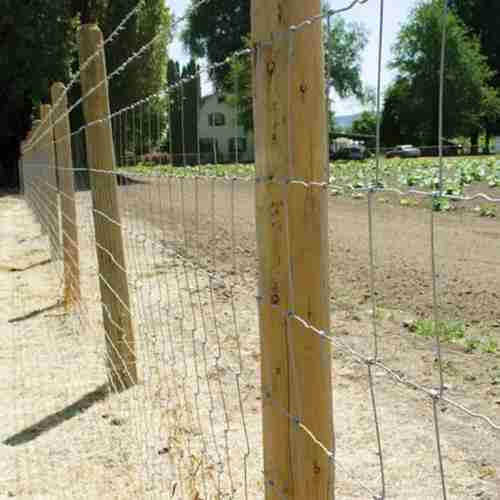
Agricultural woven fences are typically made of galvanized steel wire. The woven wire construction provides strength and durability, making it suitable for containing livestock and securing agricultural areas. Here’s a general overview of the woven process for agricultural fences.
7.1 Material Selection
The primary material used for agricultural woven fences is galvanized steel wire. Galvanization involves coating the steel wire with a layer of zinc to protect it from corrosion, extending the life of the fence.
7.2 Wire Weaving
The weaving process involves interlocking the horizontal and vertical wires to create a sturdy mesh. The most common weaving pattern for agricultural fences is the “woven” or “hinge joint” design. This design allows the fence to flex under pressure and prevents it from breaking.
7.3 Mesh Size and Gauge
The mesh size (the spacing between the wires) and the gauge (thickness) of the wire are important factors in determining the fence’s strength and suitability for different applications. Larger mesh sizes are suitable for larger animals, while smaller mesh sizes are used for smaller animals or to prevent wildlife from entering.
7.4 Height and Length
Agricultural woven fences come in various heights and lengths to accommodate different needs. Taller fences are often used for larger livestock, while shorter fences may be suitable for smaller animals or property delineation.
7.5 Installation
Installation involves stretching the woven wire fence along the desired perimeter and securing it to posts. Corner and end posts are usually more substantial to provide additional support.
7.6 Tensioning
Tensioning the fence is crucial for maintaining its strength and preventing sagging. This is often done using tensioning devices or tools during the installation process.
7.7 Additional Features
Some agricultural woven fences may include additional features such as graduated mesh (smaller openings at the bottom to contain smaller animals) or special coatings for enhanced durability.
8. What role does agricultural fencing play in crop protection?
Agricultural fencing plays a crucial role in crop protection by serving as a barrier to prevent or control the entry of animals and pests that can damage or destroy crops. The primary functions of agricultural fencing in crop protection include.
8.1 Animal Exclusion
Agricultural fencing helps keep out animals such as deer, rabbits, rodents, and livestock that may graze on or trample crops. This is especially important in areas where wildlife or domestic animals have access to farmland.
8.2 Pest Control
Agricultural fencing can act as a barrier to certain types of pests, including insects and birds, which may damage crops. This is particularly important for high-value crops where even small losses can have a significant economic impact.
8.3 Boundary Definition
Agricultural fencing helps establish clear boundaries for agricultural fields, preventing accidental encroachment by humans or animals. This can be important in areas where land is shared or where there is a need to differentiate between different crops or land uses.
8.4 Security
Agricultural fencing provides a level of security by deterring theft or vandalism of crops. It serves as a physical barrier that makes it more difficult for unauthorized individuals to access and damage the agricultural property.
8.5 Wind and Erosion Control
In some cases, fencing can help reduce the impact of wind on crops, providing a form of windbreak. This can be particularly important in areas prone to soil erosion, as the fencing helps to stabilize the soil and protect crops from damage caused by strong winds.
8.6 Wildlife Conservation
In certain situations, agricultural fencing may be used to protect crops from wildlife, while also helping to conserve and protect local wildlife populations. For example, fencing can be used to create wildlife corridors that allow animals to move freely while avoiding agricultural areas.
8.7 Crop Rotation and Management
Agricultural fencing can be used to divide fields for crop rotation and management purposes. This helps in controlling access to specific areas during different stages of the agricultural cycle.
9. Conclusion
In conclusion, agricultural barriers, such as fencing, play a multifaceted and essential role in safeguarding crops and ensuring the overall success of farming operations.
These barriers serve as a first line of defense against a variety of potential threats, ranging from wildlife and domestic animals to pests and unauthorized human activities.
Agricultural fencing helps prevent damage caused by wildlife such as deer, rabbits, rodents, and livestock. By excluding these animals, farmers can mitigate the risk of crop loss and damage.
Fencing provides a level of security by deterring theft, vandalism, and unauthorized access. This aspect is crucial for safeguarding the economic investment in crops and maintaining the integrity of agricultural operations.
Some types of fencing can serve as windbreaks, protecting crops from the damaging effects of strong winds and reducing soil erosion. This is particularly important in areas prone to these environmental challenges.
Fencing can be employed to create wildlife-friendly barriers, allowing for coexistence with local fauna while protecting crops. This approach supports biodiversity and ecological balance.
In essence, the strategic deployment of agricultural barriers aligns with sustainable and productive farming practices. The choice of fencing type, height, and design depends on the specific challenges faced by the farmer, considering factors such as local wildlife, pest pressures, and environmental conditions.
