
Prison razor wire
Prison razor wire is a type of security fencing material commonly used in correctional facilities, military installations, and other high-security areas.
It consists of a coil or flat strip of wire with sharp, razor-like barbs or blades that are designed to deter and prevent unauthorized access, escape attempts, or intrusions.
The sharp barbs on the wire make it difficult and dangerous for individuals to climb over or through the barrier. It serves as an effective deterrent by posing a significant physical threat to anyone attempting to breach the perimeter.
DEZE FENCE is a professional manufacturer of prison razor wire, with rich industry experience and expertise in this field. Our products are of the highest quality, designing the best solutions and selecting the best materials for our customers.


ProductS
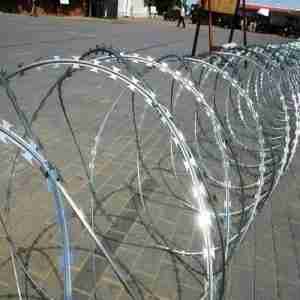
Prison Concertina Razor Wire
Prison concertina razor wire consists of a coil of razor wire with sharp, serrated barbs or blades that are closely spaced along the wire.
This type of razor wire is known for its effectiveness in deterring unauthorized access and preventing escape attempts. When installed on fences, walls, or other structures, it poses a significant physical barrier that is difficult and dangerous to breach.
Concertina razor wire is typically designed to be intimidating and formidable, serving as a formidable security feature in areas where tight security is essential.

Anti Climbing Prison Razor Wire
Anti climbing prison razor wire is a specific type of razor wire designed to deter and prevent individuals from attempting to climb over or breach security barriers.
The “anti-climbing” aspect refers to the features and design elements intended to make it extremely challenging and dangerous for anyone trying to scale or penetrate the barrier.
This type of razor wire typically features closely spaced, sharp barbs or blades that are positioned to obstruct climbing attempts effectively. It is installed on fences, walls, or other structures to enhance security and act as a formidable deterrent against unauthorized access, escape attempts, or intrusions.
The anti-climbing prison razor wire plays a crucial role in maintaining security and preventing breaches in secure areas.
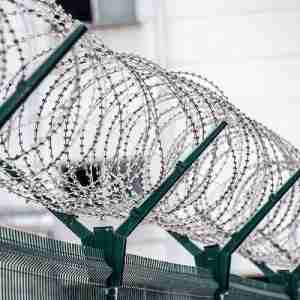
Stainless Steel Barbed Prison Razor Wire
Stainless steel barbed prison razor wire is a specialized security fencing material known for its exceptional durability and resistance to corrosion.
Constructed from stainless steel, this razor wire variant can withstand the rigors of outdoor exposure and harsh weather conditions.
This durable and corrosion-resistant construction ensures that it remains a formidable security barrier over time, reducing the need for frequent maintenance or replacement.
Stainless steel barbed prison razor wire plays a vital role in maintaining security and deterring breaches, making it an ideal choice for institutions where dependable and long-term security is paramount.
Techniques
How sharp is prison razor wire?

Prison razor wire is extremely sharp and designed to be a formidable deterrent to climbing, scaling, or breaching security barriers.
The blades or barbs on the wire are typically designed to have razor-like edges, which can cause severe injuries if someone comes into contact with them.
The sharpness of prison razor wire is intentionally crafted to discourage unauthorized access, escape attempts, and intrusions in high-security areas, including correctional facilities and military installations.
How is prison razor wire manufactured?

Prison razor wire is manufactured by attaching sharp-edged barbs or blades to a central core wire. This core wire, typically made from high-tensile steel or stainless steel, offers structural support and durability.
Blades, constructed from hardened steel, are meticulously spaced and clustered around the core wire, designed with razor-like edges.
The spacing and configuration of these blades may vary to create different razor wire types. After assembly, the wire is coiled into its distinctive concertina or spiral shape.
To enhance its longevity and corrosion resistance, the razor wire may undergo a galvanization process where a protective zinc layer is applied.
What is the purpose of the prison razor barbed wire?

Key purposes of prison razor barbed wire include:
Security Enhancement: It acts as a formidable security barrier, making it extremely difficult and dangerous for individuals to climb over or breach fences, walls, or other security perimeters.
Deterrence: The menacing appearance of the sharp, serrated barbs on the wire serves as a psychological deterrent, discouraging individuals from attempting to cross or tamper with the barrier.
Perimeter Protection: It helps secure the perimeter of high-security areas, preventing inmates, unauthorized personnel, or potential threats from escaping or gaining access.
Physical Barrier: The wire creates a physical and impassable obstacle, reducing the likelihood of breaches and improving security measures.
Safety of the Facility: By deterring escape attempts, it contributes to the overall safety and security of the correctional facility, protecting both staff and inmates.
Cost-Effective Security: Razor wire is a cost-effective security solution, reducing the need for additional security personnel and complex security systems.
The primary purpose of prison razor barbed wire is to safeguard high-security environments, maintain order, and prevent security breaches by creating a highly effective physical and psychological barrier.
How secure is razor wire prison fence?

Razor wire prison fences are a highly secure and effective means of deterring unauthorized access and escape attempts in high-security environments.
The choice of razor wire type is a crucial factor, as its coiled configuration makes it particularly challenging to breach. Installation quality is paramount, ensuring a secure attachment to fencing or walls, leaving no weak points or gaps.
Razor wire fences often incorporate multiple layers of wire at varying heights to increase the security level. When integrated into a comprehensive security plan, razor wire prison fences are highly secure and effective in maintaining order and safety in correctional facilities.
FAQ
Most frequent questions and answers
Some of the key benefits include:
- Physical Deterrence: The sharp, serrated barbs or blades of barbed wire create a formidable physical barrier that is difficult and dangerous to breach, discouraging individuals from attempting to cross it.
- Psychological Deterrence:The menacing appearance of barbed wire serves as a psychological deterrent, reinforcing the notion of a high-security environment and deterring individuals from attempting to tamper with or climb over the barrier.
- Cost-Effective Security: Barbed wire is a cost-effective security solution when compared to the expense of additional security personnel or complex security systems.
- Flexibility: Barbed wire can be installed on various types of fencing, walls, or structures, making it adaptable to different security needs and configurations.
- Versatility:There are different types of barbed wire, each suited to specific security requirements, allowing for customization based on the facility’s needs.
- Low Maintenance:Barbed wire typically requires minimal maintenance, reducing ongoing costs.
- Enhanced Security:When integrated into a comprehensive security plan, barbed wire enhances the overall security of the facility.
- Effective Deterrent:It is known for its effectiveness in deterring escape attempts, unauthorized access, and intrusions.
Prison barbed wire provides a cost-effective and practical means of enhancing security and maintaining order in high-security environments.
Blade Length | 2.5 inches (6.35 cm) to longer |
Coil Diameter | 12 inches (30 cm) to 24 inches (60 cm) or more |
Preventing Unauthorized Access: Prison wall barbed wire creates a formidable physical and psychological barrier, making it difficult and dangerous for individuals to climb over or breach prison walls.
Deterring Escape Attempts: The menacing appearance of barbed wire reinforces the notion of a high-security environment, discouraging inmates from attempting escape.
Psychological Deterrence: The presence of prison wall barbed wire has a psychological impact on inmates, reminding them of the consequences of attempting to breach security measures.
Cost-Effective Security: Barbed wire is a cost-effective security solution when compared to the expense of additional security personnel or complex security systems.
Prison metal razor wire differs significantly from traditional barbed wire in design, purpose, and effectiveness.
Metal razor wire boasts razor-sharp blades positioned closely together in a concertina or spiral pattern, delivering extreme sharpness and posing a formidable physical and psychological barrier.
It is tailored for high-security applications, such as prisons and military facilities, serving as a potent deterrent to unauthorized access, escape attempts, and intrusions.
Traditional barbed wire consists of spaced-out, simple wire spikes and has more diverse applications, including agriculture and livestock containment.
While both offer some level of deterrence, metal razor wire is known for its heightened sharpness and suitability for critical security needs, setting it apart from traditional barbed wire.
High-Tensile Steel: The core wire is often made of high-tensile steel, which provides strength and durability, ensuring the wire can withstand attempts to breach or tamper with it.
Sharp Blades or Barbs: Manufacturers supply sharp, serrated blades or barbs, which are typically made from hardened steel.
Galvanized Coating: Some razor wire may feature a galvanized coating to enhance corrosion resistance, making it suitable for outdoor applications and ensuring a longer service life.
Razor wire prison is typically installed on prison fences or walls with careful consideration for security, effectiveness, and safety. The installation process involves several key steps:
- Assessment: Before installation, security experts assess the facility’s specific security needs and determine the best locations for razor wire placement.
- Secure Attachment: The razor wire is securely attached to the existing prison fence or wall. This is often done using clips, brackets, or other specialized fixtures. The wire must be tightly secured to prevent any gaps or loose sections.
- Height and Configuration:Razor wire is often installed at varying heights, depending on the specific security requirements. Multiple layers of razor wire may be used to increase security.
- Spacing: The spacing between coils or blades is set to create an effective deterrent without providing footholds for climbing.
Safety measures are crucial during installation to prevent accidents.
Safety precautions when handling prison barbed wire are essential due to its extreme sharpness and potential for causing serious injuries.
Protective gear, including heavy-duty gloves, safety goggles, and appropriate clothing, must be worn. Individuals should be cautious, use slow and deliberate movements, and familiarize themselves with the specific type of barbed wire they are handling.
Specialized tools and equipment designed for barbed wire are necessary to minimize risks. Proper installation is critical, ensuring secure attachment and correct tension.
Razor barbed wire for prison security can serve as either a permanent or temporary security feature, depending on the facility’s requirements and the intended use.
Many correctional facilities opt for permanent installations that provide long-term security and deterrence. These installations are designed to be highly durable and withstand outdoor exposure.
In some situations, razor wire might be installed temporarily, such as during construction or maintenance activities, or to secure specific areas for a limited duration.
The specific appearance may vary slightly depending on the type and configuration of the razor wire, but common features include:
Sharp Blades or Barbs: The most prominent feature is the presence of sharp, serrated blades or barbs, which are designed to deter and prevent unauthorized access.
Coiled or Spiral Configuration: Razor wire is often installed in a coiled or spiral pattern, such as concertina wire.
Metallic Construction: Razor wire is typically made of high-tensile steel or stainless steel, providing durability and resistance to corrosion.
Silver or Metallic Color: The blades and core wire of razor wire are usually a silver or metallic color, which may be further enhanced by galvanization to prevent rust and corrosion.
Multiple Layers: In some installations, multiple layers of razor wire may be used to create a more formidable security barrier.
Regular upkeep helps identify and address any issues that may compromise security. Here are some maintenance requirements for razor wire prison fences:
Visual Inspections: Regular visual inspections are crucial to check for damage, tampering, or signs of wear.
Cleaning: Cleaning the razor wire periodically can help remove debris and contaminants that might affect its sharpness and appearance.
Tension Checks: Ensuring that the wire is properly tensioned and securely attached is essential for maintaining its effectiveness. Loose sections should be tightened.
Repairs and Replacements: Damaged or compromised sections of razor wire should be repaired or replaced as needed. This includes fixing any loose or dislodged barbs.
Galvanization Inspection: If the razor wire is galvanized, regular inspections should be conducted to ensure the coating remains intact to prevent corrosion.
Security Measures: Ensuring that the fence is secure, with no gaps or weak points, is vital for maintaining overall security.
By following these maintenance requirements, correctional facilities can keep their razor wire prison fences in optimal condition, ensuring they continue to serve as effective security barriers.